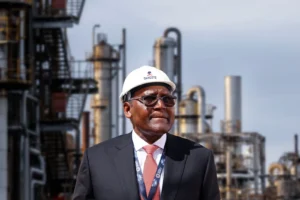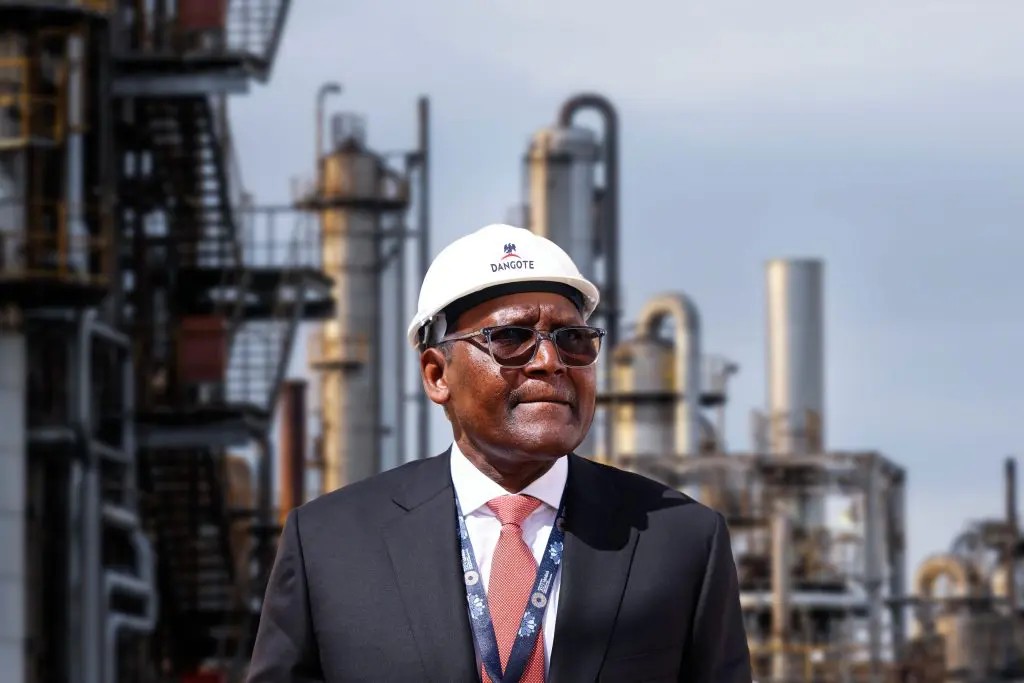
Africa’s richest man, Aliko Dangote, has assured that his refinery’s new distribution model will not cost Nigerians their jobs, but instead create thousands of new opportunities.
Speaking at a press briefing in Lagos, the chairman of the Dangote Group dismissed concerns raised by oil sector unions over his plan to deploy 4,000 CNG-powered trucks for nationwide fuel distribution. Critics, including the Nigeria Union of Petroleum and Natural Gas Workers (NUPENG) and the Natural Oil and Gas Suppliers Association of Nigeria (NOGASA), had warned that the move could wipe out existing jobs and give Dangote unfair dominance in the downstream sector.
Dangote, however, insisted the opposite is true. According to him, each truck will support at least six roles, ranging from drivers and logistics managers to technicians and dispatch staff. Altogether, the project is expected to generate about 24,000 jobs.
He also revealed that drivers in the new fleet would be some of the best paid in the transport sector. “Our drivers earn nearly three to four times the minimum wage,” he said, adding that pay packages are competitive even compared with graduate salaries. Based on Nigeria’s minimum wage of ₦70,000, this would put monthly earnings for drivers between ₦210,000 and ₦280,000.
Beyond salaries, Dangote noted that drivers with five accident-free years on the job would qualify for housing loans, part of broader incentives designed to retain staff in the high-risk business of hauling fuel.
Industry observers say the compensation levels far outpace what many Nigerians take home. A PiggyVest survey in 2024 found that more than one-third of workers earned less than ₦100,000 monthly, while entry-level pay for degree-required jobs such as digital marketing and sales starts around ₦150,000, according to Nexford University research.
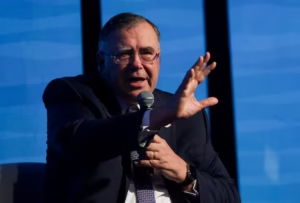
The refinery boss also pushed back at claims of monopoly. “We are not taking anyone out of the market. Our trucks are not robots—they need people to drive and maintain them,” he said.
Dangote Refinery’s trucking initiative is aimed at cutting distribution costs by over ₦1.7 trillion annually and improving efficiency in fuel supply. Despite union fears, the company insists the plan will expand opportunities rather than shrink them.