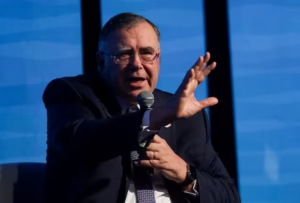
TotalEnergies CEO Patrick Pouyanné has said he expects the European Union to relax its mandate on the use of sustainable aviation fuel (SAF), citing strong opposition from airlines and uncertainty around future regulations.
Pouyanné made the remarks during a World Economic Forum panel on clean fuels, where he drew parallels between the SAF policy and the EU’s earlier proposal to ban new combustion-engine vehicles from 2035, a plan that was later softened. According to him, aviation fuel regulations are likely to follow the same path.
Under current EU rules, at least 2 percent of jet fuel supplied at European airports must be sustainable aviation fuel. This requirement is set to increase to 6 percent by 2030 and 20 percent by 2035. However, Pouyanné said airlines are already pushing back strongly against the upcoming targets.
He noted that while TotalEnergies produces SAF at several of its refineries and has plans to expand capacity, the company has slowed down new investments. The CEO explained that airlines are only willing to purchase the minimum volumes required to comply with regulations, limiting demand beyond mandated levels.
Pouyanné also dismissed claims from airlines that fuel suppliers are not investing enough in SAF production. He argued that cost remains the biggest barrier, as sustainable aviation fuel is currently three to four times more expensive than conventional jet fuel.
According to him, airlines expect biofuels to be priced similarly to oil-based jet fuel, an assumption he described as unrealistic. He said TotalEnergies could supply up to 10 percent SAF to European airlines by 2030, but only if customers are prepared to pay higher prices.
The TotalEnergies CEO warned that regulatory uncertainty could further reduce investment in low-carbon fuels. He said frequent changes to policy targets risk leaving companies with stranded investments in biorefineries if mandates are later revised.
Pouyanné added that, as long as the market remains heavily regulated, companies will remain cautious about committing large sums to fuel transition projects without clear and stable long-term policies.