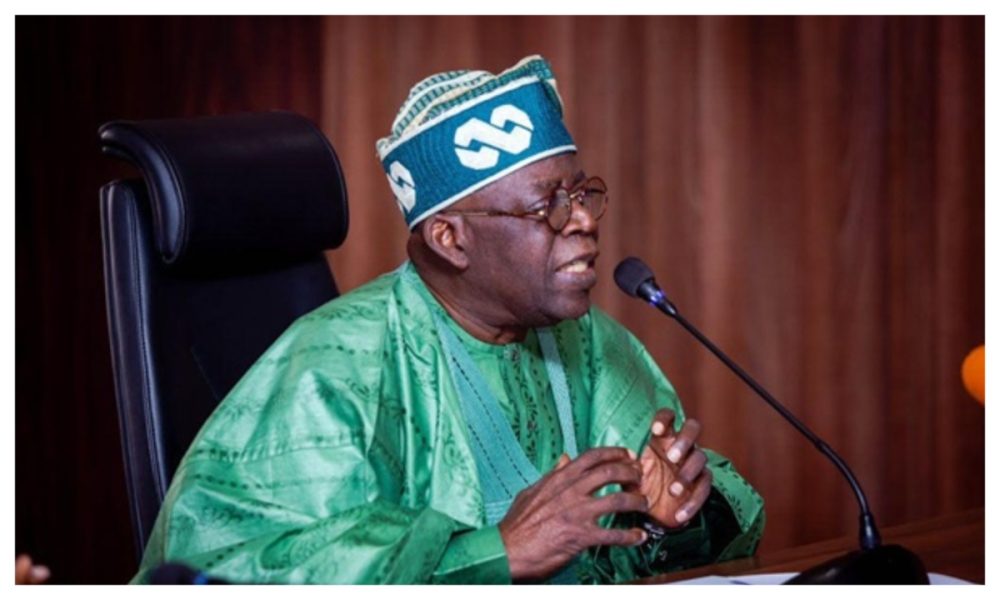
President Bola Tinubu has approved a set of targeted fiscal incentives aimed at reviving Shell’s long-delayed $5bn Bonga South-West deep offshore oil development, a project expected to significantly boost Nigeria’s oil output, job creation, and foreign exchange earnings.
The approval was granted after the President received a delegation from Shell, led by its Global Chief Executive Officer, Wael Sawan, at the Presidential Villa in Abuja. The incentives are designed to encourage new investment in deep-water oil projects while remaining within Nigeria’s existing legal and fiscal framework.
According to a statement issued by the President’s Special Adviser on Media and Public Communication, Sunday Dare, Tinubu also directed his Special Adviser on Energy, Olu Verheijen, to ensure the incentives are formally gazetted in line with applicable laws, including the Petroleum Industry Act of 2021.
The Bonga South-West project, located about 120 kilometres offshore Nigeria in water depths exceeding 1,000 metres, has been stalled for more than a decade due to prolonged disagreements over fiscal terms between the Federal Government and Shell Nigeria Exploration and Production Company, alongside its joint venture partners.
With an estimated development cost exceeding $5bn, the project is expected to reach peak production of around 150,000 barrels of crude oil per day, with additional potential for gas output. Industry experts note that the scale and complexity of deep-water projects require carefully structured incentives to ensure commercial viability.
President Tinubu described the approved measures as carefully structured and globally competitive, stressing that they are tied strictly to new investments and additional production rather than blanket concessions.
He stated that the incentives are designed to support local content, value addition within Nigeria, and sustainable revenue generation for the government.
The President added that his administration expects the Bonga South-West project to reach a Final Investment Decision within the current administration’s first term.
He highlighted the project’s strategic importance, noting that it would create thousands of direct and indirect jobs, strengthen Nigeria’s offshore engineering and energy services sector, and generate steady foreign exchange inflows.
Tinubu also reaffirmed his government’s commitment to policy consistency, regulatory clarity, and faster decision-making, which he said are essential to rebuilding investor confidence in Nigeria’s energy sector.
Providing further context, the President disclosed that Shell and its partners have invested close to $7bn in Nigeria over the past 13 months, particularly in the Bonga North and HI projects, describing this as a sign that recent economic and energy-sector reforms are beginning to yield results.
In his response, Shell CEO Wael Sawan said the investment environment in Nigeria has improved significantly, adding that the company is increasingly confident in the country’s long-term prospects as a destination for major energy investments.
The Bonga field, which began production in 2005, was Nigeria’s first deep-water oil development and remains a key asset in the country’s offshore oil portfolio.