Brazil is set to ramp up oil and gas exploration spending in 2026, with investments expected to reach about $900 million, according to estimates from the country’s petroleum regulator, the National Petroleum Agency (ANP).
The renewed spending drive follows a rebound in exploration activity last year, led largely by Petrobras, as the state-controlled producer intensifies efforts to replace reserves and sustain output. The momentum is expected to carry into 2026, with plans for 19 exploration wells, including five offshore and 14 onshore.
Most of the budget will go into drilling. ANP projections show that around $602 million, nearly 70% of total exploration spending, will be dedicated to well drilling alone. Offshore campaigns will absorb the bulk of this amount.
Petrobras is expected to dominate offshore activity, with drilling planned in the Potiguar basin along Brazil’s northern equatorial margin, as well as additional prospects in the well-established Campos and Santos basins. The company is pushing new wildcat wells as it looks to strengthen long-term production capacity.
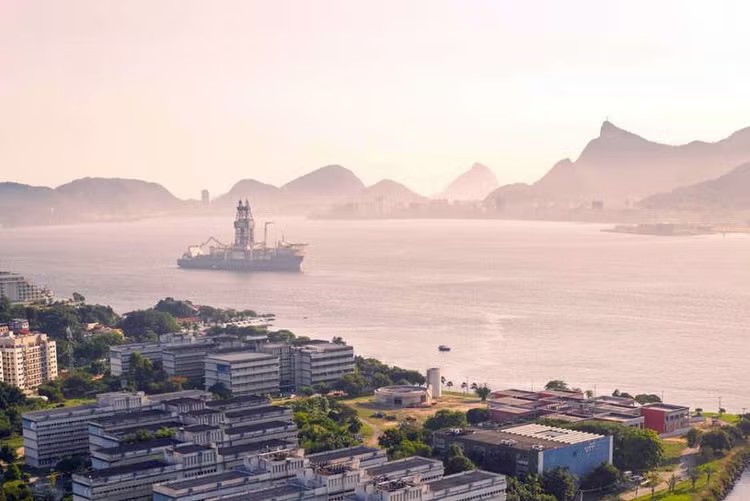
International players are also increasing their presence. BP is preparing additional drilling work after securing the Transocean drillship Deepwater Mykonos on a 10-month contract.
The rig will be used to appraise the Bumerangue pre-salt discovery and drill a new prospect in the Tupinamba pre-salt area.
Beyond exploration wells, the regulator expects about $140 million to be spent on drillstem testing at offshore discoveries during the year.
Seismic activity will also feature prominently, with plans to acquire more than 16,500 square kilometres of 3D seismic data, alongside extensive reprocessing of existing 3D and 2D surveys. These seismic programmes are estimated to cost nearly $135 million.
Onshore exploration, by contrast, will attract more limited funding, with spending forecast at roughly $35 million.
Brazil currently produces approximately 3.6 million barrels of oil per day and about 175 million cubic metres of natural gas daily. Regulators stress that sustained exploration is critical to maintaining and expanding production, warning that output from mature fields will decline without continuous investment in new resources.