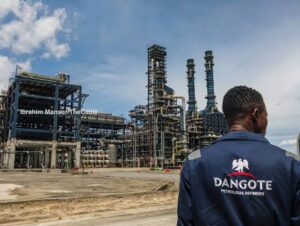
The Managing Director of Dangote Petroleum Refinery, David Bird, has argued that solar power becomes significantly more expensive when its total system and life-cycle costs are properly assessed, cautioning against energy debates that overlook reliability and backup requirements.
Bird spoke at a conference organised by the Nigerian Association for Energy Economics in Lagos, where he addressed policymakers, industry players and energy experts on the future of Africa’s energy landscape and the role of different power sources in industrial development.
According to him, conversations around renewable energy often focus narrowly on installation costs while ignoring the additional investments needed to guarantee steady electricity supply when solar and wind sources are unavailable.
He explained that weather-dependent energy introduces structural challenges for countries that require constant power for homes, industries and critical infrastructure. Ensuring uninterrupted supply, he said, demands extensive backup systems such as batteries or alternative generation sources, which significantly add to overall costs.
Bird stressed that his position was not opposition to renewable energy but a call for a practical approach that weighs reliability, utilisation and economic impact. He warned that expensive infrastructure that remains underused due to intermittency could be difficult to justify for developing economies.
The refinery executive also questioned how energy planners determine the size of storage systems required to compensate for periods without sunlight or wind, noting that such systems may sit idle for long periods, thereby reducing their value for money.
He further argued that many discussions underestimate the long-term expenses associated with maintaining reliable solar and wind systems, including the need for full backup electricity networks to support them.
Bird raised concerns about how renewable energy incentives in some countries tend to favour middle-income homeowners who can afford the initial investment in panels and batteries, while renters and lower-income earners are often excluded from the benefits.
He also pointed to emerging environmental concerns tied to the disposal of ageing solar panels and wind turbines, saying their eventual waste management is rarely included in cost projections.
In addition, Bird warned that shifting energy production away from fossil fuel economies without developing local manufacturing capacity for renewable technologies could weaken domestic industries. He noted that some countries export raw materials used in renewable equipment production, only to import finished products at higher costs.
While acknowledging that renewables have a place in the energy transition, Bird maintained that countries like Nigeria must adopt a diversified energy strategy that safeguards energy security, supports industrialisation and remains economically sustainable.