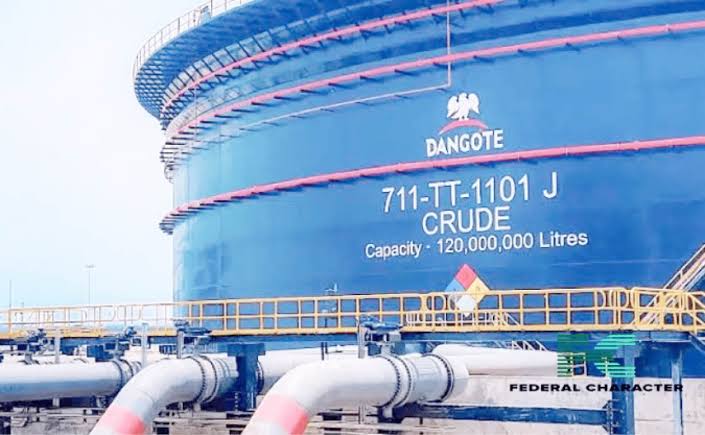
Dangote Refinery has introduced a revised petrol distribution model that limits direct sales to major oil marketers and depot owners, signaling another adjustment in Nigeria’s deregulated downstream petroleum market.
Under the new arrangement, the refinery will sell Premium Motor Spirit (PMS) only to approved large-scale marketers and operators with functional depot facilities. The framework, which has the backing of the Nigerian Midstream and Downstream Petroleum Regulatory Authority, marks a departure from the earlier system that allowed independent marketers to purchase fuel directly from the refinery.
Industry sources say companies cleared to lift products include established marketers and depot operators such as Mobil/11 Plc, Total, Matrix, Rainoil, Nipco, Ardova, AA Rano, MRS and the Nigerian National Petroleum Company, among others. The approach mirrors a controlled distribution structure previously adopted in late 2025, when access to refinery products was restricted to a smaller group of buyers.
Market operators explained that the strategy is designed to improve supply coordination and pricing stability by placing distribution largely in the hands of firms with storage capacity and wider logistics networks. As a result, independent marketers including members of the Independent Petroleum Marketers Association of Nigeria and the Petroleum Products Retail Outlets Owners Association of Nigeria will now source petrol from depots rather than purchasing directly from the refinery.
Despite the change in sales structure, the refinery’s gantry price remains unchanged at ₦774 per litre, according to downstream pricing trackers. However, early pricing signals from depots suggest pump prices in Lagos could hover around ₦800 per litre, while Abuja, Port Harcourt and Warri may trend closer to ₦820 per litre, depending on depot-level pricing and distribution costs.
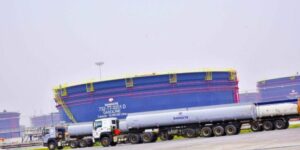
Under the revised model, Dangote Refinery will supply petrol through coastal vessel deliveries, ship-based transactions and gantry loading, but only for authorised buyers. Depot owners will then distribute products nationwide and set ex-depot prices.
Industry stakeholders have largely welcomed the development, describing it as a move aimed at reducing market volatility and strengthening confidence across the downstream value chain. Some operators noted that the refinery had previously absorbed losses during sharp price swings and is now seeking a more balanced and predictable pricing environment.
In a related development, the Nigerian Midstream and Downstream Petroleum Regulatory Authority recently held a high-level meeting with wholesale suppliers in Abuja to discuss supply adequacy, pricing transparency and regulatory compliance. Participants reaffirmed their commitment to industry standards and collaboration with the regulator.
Together, the refinery’s revised sales strategy and the regulator’s ongoing stakeholder engagements point to a coordinated effort to stabilise Nigeria’s downstream fuel market, with depot owners and major marketers expected to play a more central role in fuel distribution nationwide.