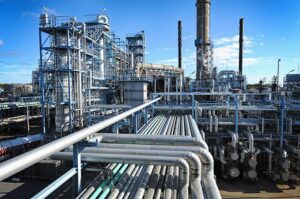
Dangote Petroleum Refinery says Nigeria will not face fuel shortages despite rising tensions in the Middle East that are affecting global oil markets.
In a statement released on Thursday, the company said it is prioritising the Nigerian market by ensuring petrol and other refined products are supplied locally before exports.
The refinery explained that the ongoing crisis in the Middle East has disrupted fuel production in several countries, with some refineries shutting down operations. At the same time, China has reportedly suspended exports of petrol and diesel, further tightening global fuel availability.
According to the company, Nigeria’s growing refining capacity is helping the country cushion the effects of international supply disruptions. With more fuel now processed locally, the country is less dependent on imported petroleum products.
Dangote Refinery also noted that global crude oil prices have surged due to the crisis. Brent crude has climbed by roughly 26 per cent, rising above $84 per barrel.
The increase in crude costs has forced the refinery to adjust its depot petrol price by about N100 per litre, representing around a 12 per cent increase. However, the company said it absorbed part of the additional cost to ease the impact on consumers.
The refinery explained that it purchases crude oil at international market prices regardless of the source. Nigerian crude typically sells between $3 and $6 above the Brent benchmark, while freight charges add about $3.50 per barrel.
As a result, the refinery said the cost of crude delivered to its facility currently ranges between $88 and $91 per barrel, compared with about $68 per barrel when petrol previously sold at around N774 per litre.
Dangote Refinery disclosed that it currently receives about five cargoes of crude oil each month from the Nigerian National Petroleum Company Limited (NNPCL), which are paid for in naira. However, the facility requires about 13 cargoes monthly to fully meet Nigeria’s fuel demand.
Because of this gap, the refinery said it has to purchase additional crude from international traders using foreign exchange.
Despite these challenges, the company maintained that large-scale domestic refining will help reduce Nigeria’s dependence on imported fuel and protect the country from severe supply shocks during global crises.
The refinery also announced plans to improve fuel distribution nationwide by introducing trucks powered by compressed natural gas (CNG).
According to the company, the rollout of the CNG-powered trucks will begin this month to speed up product delivery and lower transportation costs.