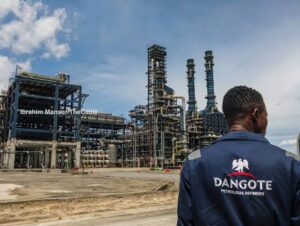
The Managing Director and Chief Executive Officer of Dangote Petroleum Refinery, David Bird, has said petrol prices may not drop soon despite the refinery operating at full capacity, citing the impact of volatile global oil markets.
Speaking during a media briefing on Monday, Bird explained that the refinery operates under international market conditions and purchases crude oil at globally benchmarked prices, including crude sourced from Nigeria.
According to him, even under the Federal Government’s crude-for-naira initiative, the refinery still buys Nigerian crude at prices tied to international benchmarks. He added that the company also incurs global freight and insurance charges to transport the crude from export terminals to the refinery.
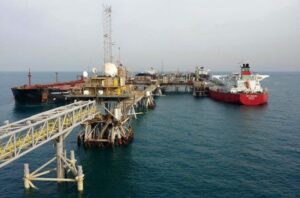
Bird noted that Nigerian crude represents roughly 30 to 35 per cent of the refinery’s total supply, while the remaining volumes are acquired from the international market and paid for in United States dollars. He said many of these supplies pass through traders before reaching the refinery, increasing procurement costs.
The refinery has processed different grades of crude oil from several regions, including West Texas Intermediate from the United States as well as crude grades from South America, Central America and parts of West Africa.
Acknowledging the hardship faced by consumers, Bird said the company was working to manage operational costs and reduce the impact of global market pressures on fuel pricing.
He highlighted the scale of volatility in the global oil market, noting that Brent crude prices had jumped from the mid-$60 range about a week earlier to around $118 per barrel. He also disclosed that tanker freight costs had surged significantly, rising from roughly $800,000 to about $3.5m per shipment.
Key points from the media session shared by the Dangote Group on its official X account indicated that the refinery’s exposure to international commodity markets goes beyond crude oil prices. It also includes shipping costs, insurance and financing charges, all of which influence final fuel prices.
Despite these pressures, Bird said local refining had improved Nigeria’s fuel supply stability. According to him, the operation of the refinery has helped the country avoid the fuel shortages and long queues that often occur when global supply chains are disrupted.
He added that the facility is currently running at its installed capacity of about 650,000 barrels per day, with the ability to increase output to around 700,000 barrels per day. The refinery, he said, remains committed to meeting Nigeria’s fuel demand even during periods of global supply shocks.
Earlier on Monday, the refinery raised the gantry price of Premium Motor Spirit to N1,175 per litre, up from N995 per litre announced last Friday. The increase of N180 represents about an 18 per cent rise within three days.
The latest adjustment marks the third price increase in about a week, after gantry prices climbed from N774 per litre earlier.
Across several states, retail pump prices have already crossed N1,000 per litre, with some filling stations selling petrol for as much as N1,200 per litre.