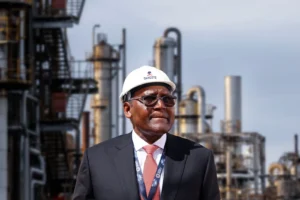
The Chief Executive Officer of the Dangote Petroleum Refinery, David Bird, has called for the gradual closure of outdated refineries around the world, arguing that the future of the oil and gas industry lies in modern, energy-efficient facilities built to meet today’s environmental and technological standards.
Bird made the remarks in Lagos during the conference of the Nigerian Association of Energy Economics, where discussions centred on energy transition, refining capacity and Africa’s position in global energy security.
According to him, global refining is undergoing a structural shift driven by stricter fuel standards such as Euro 5 and Euro 6, improved automation, and the need to reduce the environmental footprint of petroleum processing. He said these changes are influencing where investments flow, with modern refineries gaining preference over aging infrastructure that cannot keep up with current benchmarks.
He explained that while older facilities played important roles in the past, the industry is moving toward systems that prioritise efficiency, cleaner production and advanced technology.
In his view, phasing out less efficient refineries would ultimately benefit both the industry and the environment.
Bird described the Dangote refinery as an example of the direction refining must take globally, noting its high level of automation, data integration and energy efficiency. He said the cleaner fuels produced at the facility align with global environmental expectations and could indirectly push older, polluting refineries out of operation.
He stressed that reinvestment across the oil and gas value chain must now focus on best available technology, saying efficiency improvements are no longer optional but necessary for survival in the sector.
The refinery boss also expressed confidence in the plant’s operations, stating that it is currently running at its nameplate capacity of 650,000 barrels per day following maintenance carried out earlier in the year. He noted that the facility continued to supply products during the maintenance period, helping to prevent fuel shortages during the festive season.
Bird added that production levels are more than enough to meet Nigeria’s demand for petrol, diesel and aviation fuel, with surplus volumes already being exported. He disclosed that exports from the refinery have reached more than 11 African countries, in line with the company’s “Africa first” supply approach championed by Aliko Dangote.
He said the refinery is also planning an expansion that would raise its processing capacity to about 1.4 million barrels per day within the next three years.
On debates surrounding fuel pricing and subsidy, Bird maintained that decisions on cushioning the impact of rising fuel costs rest with government policy, noting that the current cost-of-living challenge is a global issue that extends beyond energy prices.
His comments come amid renewed public debate about the viability of Nigeria’s older state-owned refineries and broader questions about the future of refining in an era of tightening environmental and efficiency standards.