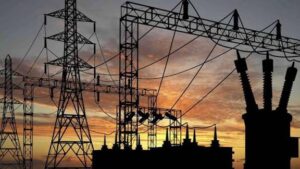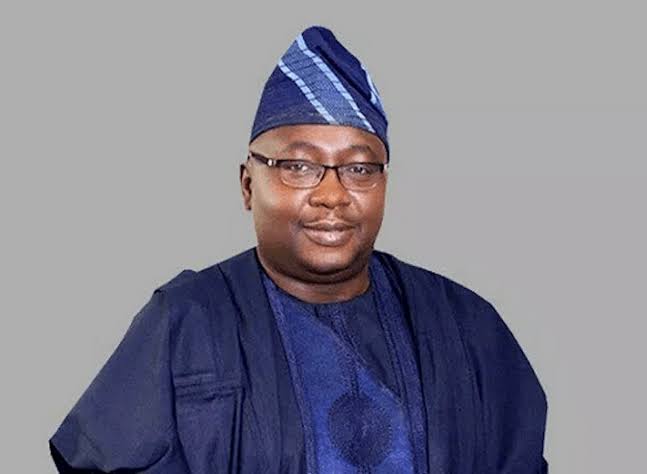
Nigeria’s Minister of Power, Adebayo Adelabu, has made a passionate appeal to President Bola Tinubu to urgently intervene in resolving the over ₦4 trillion debt owed to electricity generation companies (GenCos), warning that the survival of the country’s entire electricity sector depends on it.
“GenCos are owed over ₦4 trillion. This threatens operations and future investments in the sector. Without immediate attention, we risk a collapse of the sector, threatening the gains we have made thus far,” Adelabu said on Wednesday during the commissioning of Sahara Energy’s 180MW Afam II power plant in Rivers State.
While praising the administration’s reform strides, Adelabu stressed that energy infrastructure without a viable market is unsustainable. He urged President Tinubu to back the creation of a credible and bankable financial framework to stabilize the electricity market.
“I respectfully appeal for your continued support to prioritize a sustainable mechanism for clearing GenCos debts… to ensure the electricity market can operate viably and transparently,” he said.
The minister acknowledged key sector wins under the Tinubu administration, including the implementation of cost-reflective tariffs in early 2024, which drove market revenue up by 70% to ₦1.7 trillion, reducing the tariff shortfall by ₦1.1 trillion.
“This is a demonstration that reform works,” Adelabu noted. “But it must now be reinforced by debt resolution and systemic financial clarity.”
He also highlighted the success of the Electricity Act 2023, which decentralized electricity regulation, enabling 11 states to take control of their own power sectors.
In terms of performance, Adelabu pointed to the country’s all-time high energy generation of 5,801MW recorded on March 2, 2025, and a record daily output of 128,370MWh—made possible by the 700MW Zungeru Hydropower Plant and grid upgrades.
Significantly, Nigeria has recorded zero grid collapses in 2025 so far, a stark contrast to previous years.
Other reforms include the Presidential Metering Initiative, which targets 1.1 million meters by the end of 2025, backed by ₦700 billion in FAAC funding, and the World Bank DISREP program, which is expected to deliver 3.2 million meters by 2026.
Adelabu also lauded the unbundling of the Transmission Company of Nigeria, leading to the formation of the National Independent System Operator (NISO) to bring efficiency and professionalism to grid management.
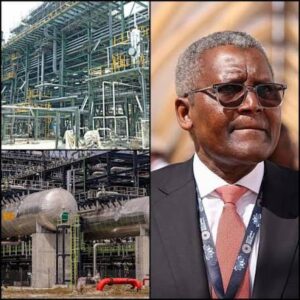
Closing his remarks, Adelabu said the newly commissioned Afam II plant symbolizes the Tinubu administration’s vision and what private sector confidence can achieve.
“Sahara Energy’s 180MW investment here in Afam is proof of that. Let this project inspire others and reinforce our shared resolve to power every home, every business, and every hope in this great nation,” he declared.