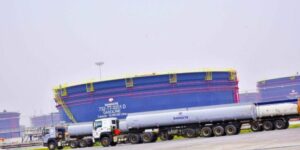
Angola is preparing to launch operations at its new Cabinda refinery, with the first batch of fuel expected before the close of 2025, according to the country’s minister of mineral resources, petroleum, and gas, Diamantino Azevedo.
The facility, designed to process 30,000 barrels per day, is the first refinery built in the Southern African nation since independence and only its second overall. Officials say the project is a strategic step toward reducing reliance on expensive fuel imports, which currently account for nearly three-quarters of the country’s domestic consumption.
At an inauguration ceremony attended by President João Lourenço, Azevedo described the project as entering a “decisive phase” that will finally allow the country to produce commercial derivatives locally.
The refinery is majority-owned by London-based Gemcorp, with Angola’s state oil company Sonangol retaining a 10% stake and providing crude supply. Gemcorp previously estimated that the initial phase could cover between 5% and 10% of Angola’s fuel needs.
Construction costs for the first phase rose to around $500–550 million, partly due to the pandemic and inflation pressures. A planned second phase would double the plant’s processing capacity to 60,000 barrels per day and add units capable of producing diesel and jet fuel.
While the Cabinda project advances, other refinery developments face hurdles. The proposed 100,000-bpd Soyo refinery is on hold amid challenges with its U.S.-led developer, Quanten Consortium. Meanwhile, the long-delayed 200,000-bpd Lobito refinery may be revived, with Sonangol in talks with Chinese and European banks to bridge a $4.8 billion funding gap.
Angola, Africa’s second-largest crude producer south of the Sahara, has long struggled with dependence on imported petroleum products despite its abundant oil reserves. The government hopes the new refinery will ease subsidy costs and reduce the economic strain that has fueled social unrest in recent years.