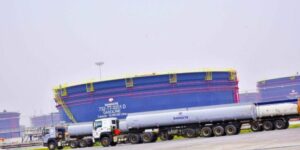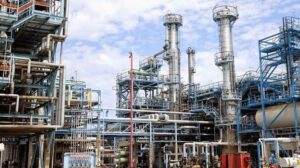
Major oil marketers have raised concerns that the Dangote Petroleum Refinery, despite boosting domestic output and reducing gantry prices, cannot single-handedly satisfy Nigeria’s petrol demand. Industry players warn that over-reliance on a single refinery is already creating operational challenges in the downstream market.
Clement Isong, Executive Secretary of the Major Energies Marketers Association of Nigeria (MEMAN), highlighted the limitations, noting that while all MEMAN members purchase fuel from Dangote, supply bottlenecks, logistical hurdles, and timing issues make it impossible for one refinery to serve the entire market efficiently.
“Every marketer buys from Dangote, but there are times when they cannot get exactly what they need, when they need it, and in the form they need it,” Isong said.
“This leads to some stations running dry unless alternative sources or importers are tapped.”
The MEMAN chief explained that fuel requirements vary by marketer, and the dependency on a single production point naturally causes delays. Some stations, he noted, have experienced shortages despite overall fuel availability in the country.
Price volatility has also made bulk purchasing risky, as sudden gantry price reductions can wipe out margins. “Even the refinery itself is facing losses due to the current pricing situation,” Isong added.
Last week, the Dangote refinery reduced its gantry price from N828 to N699 per litre, prompting retail petrol prices at some stations to drop to around N739 per litre. This move triggered a price war among marketers, forcing others to lower prices to remain competitive.
Chinedu Ukadike, spokesperson for the Independent Petroleum Marketers Association of Nigeria (IPMAN), noted that customers now follow price rather than loyalty, intensifying competition. He revealed that IPMAN has formed a partnership with Dangote to help distribute the refinery’s products more efficiently.
Dangote Group President Aliko Dangote maintains that the refinery can meet Nigeria’s daily petrol needs, currently supplying about 50 million litres to the local market. However, marketers argue that operational realities make it impractical for any single source to fully satisfy nationwide demand.