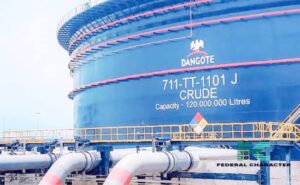
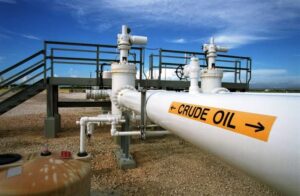
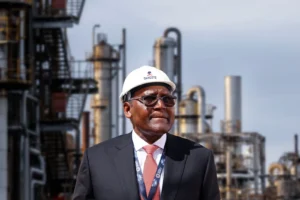
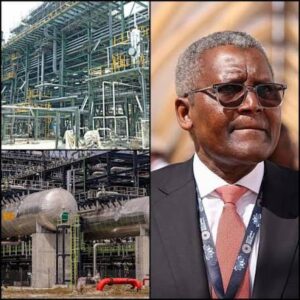
The Nigerian Midstream and Downstream Petroleum Regulatory Authority (NMDPRA) says the Dangote Refinery is now contributing an average of 20 million litres of fuel daily to Nigeria’s domestic market, marking a significant shift in the nation’s petroleum supply chain.
Chief Executive of the NMDPRA, Farouk Ahmed, made this known on Thursday at the Association of Energy Correspondents of Nigeria (NAEC) Annual Conference in Lagos. He said the 650,000-barrel-per-day refinery had become a “game changer” in Nigeria’s quest for energy independence and local refining capacity.
Ahmed, who was represented by the agency’s spokesperson, George Ene-Ita, said the refinery’s output was helping to bridge local demand, which currently stands at about 50 million litres per day. He noted that the project had already demonstrated Nigeria’s growing potential to meet its fuel needs without depending heavily on imports.
“The refinery’s operations have redefined the country’s petroleum landscape,” Ahmed said, adding that the NMDPRA was committed to creating an environment where such large-scale investments could thrive sustainably.
The Dangote Refinery, which has also exported over one billion litres of petrol between June and September this year, continues to ramp up production. Ahmed described this as a reflection of Nigeria’s “evolving refining ecosystem,” capable of supporting both domestic consumption and international exports.
To ensure long-term stability in the fuel supply chain, Ahmed announced plans to operationalise the National Strategic Petroleum Stock, in line with the Petroleum Industry Act (PIA) 2021, to serve as a safeguard against disruptions in fuel distribution.
He explained that strengthening the nation’s storage and distribution systems remained a top priority. “We are enforcing stricter standards for depot operations and product movement to curb hoarding, adulteration, and transport-related accidents,” he said.
The NMDPRA chief also highlighted the regulator’s ongoing reforms aimed at boosting transparency, attracting investment, and ensuring fair competition across the midstream and downstream sectors.
He described the refinery as “a symbol of Nigeria’s industrial renewal,” noting that it would help reduce foreign exchange pressure, create jobs, and support energy transition goals.
Ahmed further urged the media to report not only the sector’s challenges but also the progress being achieved through reforms and private investment.
“When telling Nigeria’s energy story, show the transformation — the refineries restarting, the cylinders being filled, and the pipelines expanding,” he said, stressing that the success of every policy should be measured by its impact on citizens’ lives.
He concluded that with sustained reforms, collaboration, and strong regulation, Nigeria was on track to become a regional energy hub for Africa.