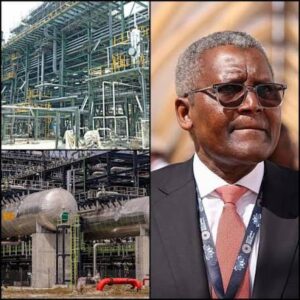
The Dangote Petroleum Refinery has adjusted its operations by switching to lighter crude oil grades as it manages downtime at a major fuel-processing unit, a move aimed at keeping production running while technical work continues.
Industry data indicates that the refinery has increasingly processed lighter crude with higher API gravity in recent weeks. This adjustment allows other operational units within the facility to function more efficiently despite the temporary shutdown of the Residual Fluid Catalytic Cracker (RFCC), a critical unit responsible for converting heavier crude into petrol and other refined products.
Analysts explain that lighter crude requires less intensive processing, making it easier for the refinery to sustain output levels when complex conversion units are unavailable. As a result, key facilities such as reformers, isomerisation units, and hydrocrackers have continued operating, limiting disruptions across the plant.
However, the absence of the RFCC has constrained the refinery’s overall processing capacity, slowing efforts to scale up production to full levels. Market trackers project that crude runs may remain moderated in the near term until the unit is fully restored.
To bridge supply gaps, the refinery has also relied on alternative production methods and increased the use of imported blending components to support gasoline output. This approach has helped maintain fuel availability despite internal operational challenges.
The Dangote Refinery, Africa’s largest single-train refinery, is expected to ramp up production more aggressively once the affected unit resumes operations. Industry observers note that the timing of the RFCC restart will play a key role in determining how quickly the facility can increase fuel supply to both domestic and export markets.