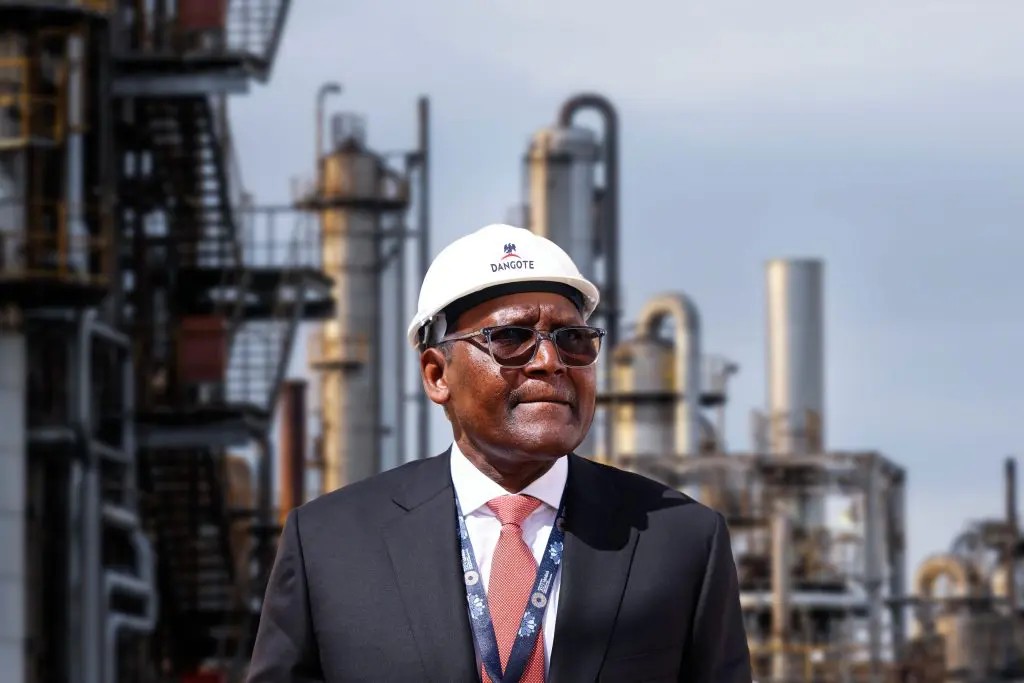
Business mogul Aliko Dangote has ruled out any plans to buy the government-owned refineries managed by the Nigerian National Petroleum Company Limited (NNPCL), saying he prefers to expand his own facility rather than take over unproductive state assets.
Dangote made this known while unveiling plans to increase the capacity of his $20 billion Lagos refinery from 650,000 barrels per day to 1.4 million barrels. According to him, acquiring the refineries would only stir unnecessary controversy, with critics accusing him of trying to monopolize the oil sector.
“Once we touch those refineries, people will start shouting monopoly,” he said. “There are other Nigerians with enough money—DAPPMAN and others—who can also build or buy refineries. It shouldn’t always be about Dangote.”
He noted that President Bola Tinubu has assured his support for local crude oil supply to aid domestic refining, saying his company’s expansion aligns with the government’s push to grow Nigeria’s economy to $1 trillion.
Dangote also recalled how his earlier attempt to buy government refineries in 2007 under former President Olusegun Obasanjo was reversed by the late President Umaru Musa Yar’Adua. He said that despite billions of dollars spent over the years, the refineries still do not work.
“About $18 billion has gone into those refineries, yet they are still not functioning,” he said.
Meanwhile, NNPCL’s Group Chief Executive, Bayo Ojulari, recently revealed that the company is carrying out a technical and commercial review of the Port Harcourt, Warri, and Kaduna refineries to determine whether to overhaul or repurpose them for better efficiency and profitability.
Industry experts and groups, including the Manufacturers Association of Nigeria, have continued to call for the sale of the refineries, arguing that they have become a drain on the nation’s economy despite several rehabilitation budgets.
Dangote’s refinery, which is already operational, is seen as a key step toward ending Nigeria’s dependence on imported fuel and achieving energy self-sufficiency.