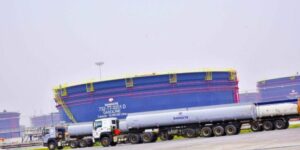
Delta State has once again emerged as Nigeria’s top oil-producing state, delivering nearly 100 million barrels of crude oil and condensate between November 2023 and September 2024, according to new data from the Nigerian Upstream Petroleum Regulatory Commission (NUPRC).
The report shows Delta accounted for 99.9 million barrels, representing more than one-third of the country’s total crude and condensate output of 295.34 million barrels within the 11-month period. The state’s dominance further solidifies its vital role in Nigeria’s oil and gas economy.
Following Delta were Akwa Ibom with 60.32 million barrels, Bayelsa with 53.2 million barrels, and Rivers with 50.83 million barrels. Together, these four states contributed nearly 90% of Nigeria’s total oil production.
However, Lagos State, which was previously listed as an oil-producing state following marginal production from the Aje Field in the Dahomey Basin since 2016, recorded no crude oil or gas output during the review period. The halt in production has been linked to unresolved disputes among stakeholders managing Oil Mining Lease (OML) 113.
Last year, Lagos disclosed it had generated over N3.9 billion from oil since joining the oil-producing states list, but recent setbacks have kept operations at a standstill.
Other states with smaller output include Ondo (8.71 million barrels), Edo (7.76 million), Imo (6.32 million), Anambra (4.77 million), and Abia (3.41 million).
On the gas side, Rivers State led the pack with 391.3 billion standard cubic feet (scf) of gas produced, followed by Bayelsa (341.2 billion scf), Delta (318.2 billion scf), and Akwa Ibom (211.9 billion scf). Edo also showed strong gas output at 95.4 billion scf, far ahead of many of its peers despite lower oil volumes.
Other contributors included Ondo with 27.1 billion scf, Anambra with 7.4 billion scf, Imo with 6.4 billion scf, and Abia with 4.46 billion scf. Like with oil, Lagos recorded zero gas output.
In total, Nigeria produced about 1.4 trillion scf of natural gas during the 11 months, with the top four states contributing over 85% of the total.
The state-by-state breakdown from NUPRC plays a critical role in determining monthly revenue allocations to oil-producing states, as it feeds into the derivation formula managed by the Revenue Mobilisation Allocation and Fiscal Commission (RMAFC).
Delta’s leading performance is credited to its concentration of oilfields and relatively stable operations by key players like Shell, Chevron, and NNPC’s upstream subsidiary, NEPL. The report highlights the urgent need for Nigeria to resolve production bottlenecks, attract investment in gas infrastructure, and develop underutilized regions to boost national revenue.