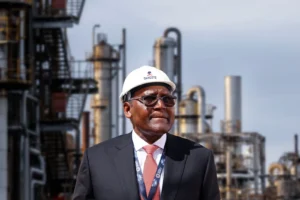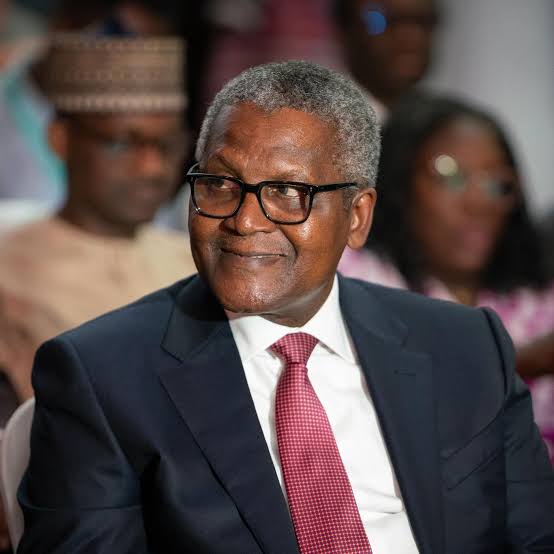
The federal government’s Technical Committee on the One-Stop Shop (OSS) for the Naira-for-Crude initiative has praised the $20 billion Dangote Petroleum Refinery and Petrochemicals, calling it a “symbol of industrial revolution” in Nigeria.
During a visit to the Lekki-based facility, the committee’s coordinator, Mrs. Maureen Ogbonna, lauded the refinery’s impact across multiple sectors of the economy—from pharmaceuticals to plastics and construction.
“This refinery touches all our lives. There’s scarcely any sector unaffected,” Ogbonna said. “God has used the President of the Dangote Group to liberate Nigeria. I see this as the beginning of an industrial revolution.”
Ogbonna also highlighted the lab facilities at the refinery, describing them as unmatched even on a global scale. “That lab alone is an institution. I don’t know of any institution in Nigeria or even globally that boasts such a laboratory for petrochemical.”
She urged Aliko Dangote, Africa’s richest man and founder of the refinery, to ignore critics and continue his efforts. “He was never self-centred. Despite the obstacles, he was driven by a vision for Nigeria’s future, reaching far beyond Africa,” she added.
In response, Dangote expressed gratitude for the federal government’s support, particularly for backing the naira-for-crude swap initiative, which he said had helped ease pressure on the dollar and stabilize the local currency.
“The swap deal has led to a reduction in petroleum product prices and ensured forex stability,” Dangote noted.
However, he voiced concern over the refinery’s growing reliance on imported crude, particularly from the United States, due to shortages in local supply.
“Despite our capacity, we’ve had to import feedstock from the US because of domestic crude shortages,” he said.
Dangote emphasized that the refinery, with a capacity of 650,000 barrels per day, was designed to meet all of Nigeria’s fuel needs—with surplus available for export.
The refinery also features its own world-class marine terminal capable of handling the largest vessels in the world, underlining its strategic importance to Nigeria’s industrial future.