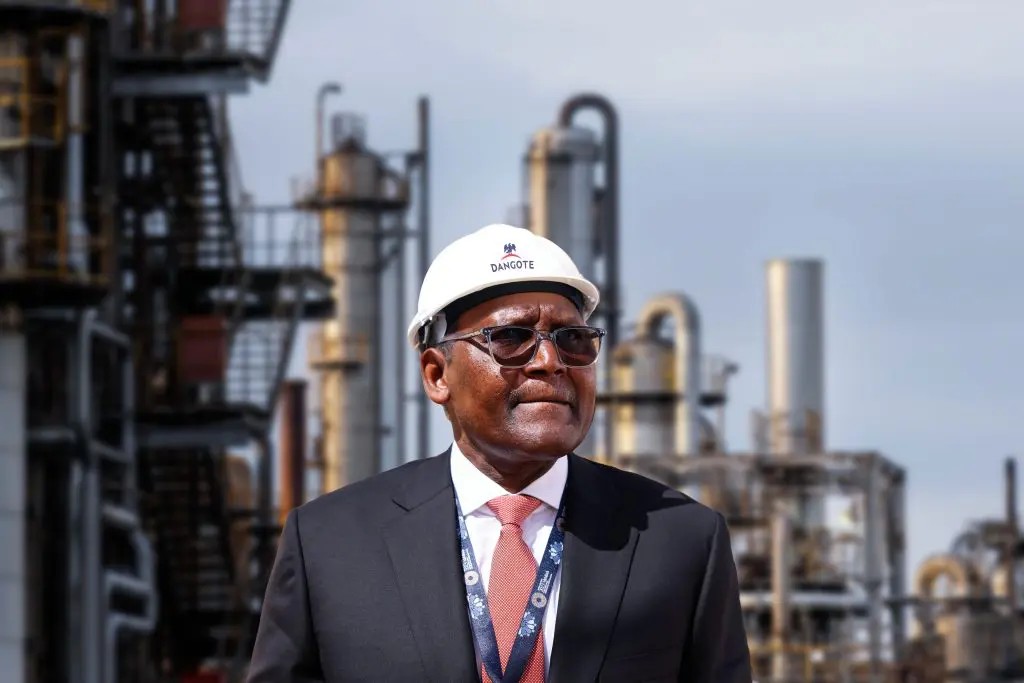
The Dangote Petroleum Refinery has cautioned that petrol prices in Nigeria could climb as high as ₦1,400 per litre if the country becomes fully dependent on imported fuel, stressing that local refining is now playing a key role in stabilising the downstream oil market.
The refinery issued the warning on Monday while rejecting claims that it was shutting down for maintenance. It described the reports as false and accused fuel importers of spreading misinformation to justify recent increases in pump prices.
According to the company, the continued operation of the Dangote Refinery has helped curb excessive pricing in a post-subsidy environment, noting that without large-scale domestic refining, fuel importers would have greater control over prices.
The refinery stated that it remains fully operational, with production running steadily and without disruption. It said it currently has the capacity to supply between 40 million and 50 million litres of Premium Motor Spirit (PMS) daily, depending on market demand.
It disclosed that on January 4, it produced 50 million litres of petrol and evacuated 48 million litres through its loading facilities, adding that existing stock levels are sufficient to meet more than 20 days of national consumption.
Addressing concerns about maintenance activities, the company explained that routine work on specific units does not affect overall output due to the integrated design of its facilities. It added that several critical processing units remain active, ensuring the continued production of petrol, diesel, and aviation fuel for the domestic market.
The refinery also said it has maintained consistent petrol supply since mid-December, with daily volumes ranging from 31 million to 48 million litres. These figures, it noted, are verifiable through depot records kept by the Nigerian Midstream and Downstream Petroleum Regulatory Authority.
Reaffirming its pricing policy, Dangote Refinery confirmed that it continues to sell petrol at an ex-gantry price of ₦699 per litre to marketers and bulk buyers without discrimination.
The company urged fuel marketers, filling station operators, and large consumers to prioritise locally refined products, arguing that domestic sourcing would help moderate pump prices, conserve foreign exchange, and strengthen Nigeria’s energy security.
It further advised Nigerians to disregard unverified reports about its operations, insisting that it remains committed to ensuring steady fuel supply and supporting the country’s economic stability and industrial growth.