State governors have been urged to take a more active role in addressing Nigeria’s persistent electricity challenges by leveraging the Electricity Act 2023 to develop independent power markets and improve electricity supply within their states.
The call comes amid concerns over the country’s weak electricity generation capacity and its impact on industrial growth, economic productivity and development.
The Electricity Act 2023 provides state governments with the authority to generate, transmit, distribute and regulate electricity within their jurisdictions, creating opportunities for them to complement the Federal Government’s efforts to address the power deficit.
The legislation, which was signed into law by President Bola Tinubu after being passed by the ninth National Assembly, allows states to develop electricity markets based on their energy resources, economic priorities and infrastructure needs.
According to the report, about 11 states, including Lagos, Enugu, Ondo, Ekiti, Oyo, Imo, Ogun, Edo, Kogi, Niger and Plateau, have commenced the transition towards independent electricity regulation. Anambra has also passed its electricity law, while Abia had begun its process before the 2023 legislation.
The report noted that decentralising electricity operations could accelerate infrastructure development by allowing states to implement projects in phases, including through local government areas and senatorial districts.
It also highlighted the scale of Nigeria’s electricity deficit, citing data from CEIC, which showed that the country generated approximately 8,879 gigawatt-hours (GWh) of electricity in 2024. This was significantly below Egypt’s 16,900GWh and South Africa’s 18,961GWh, despite Nigeria having a larger population than both countries combined.
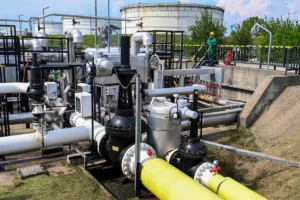
The report identified ageing power infrastructure, corruption, poor project management, inadequate investment and weak accountability as major factors limiting progress in the sector.
It cited the condition of hydroelectric facilities at Kainji, Shiroro and Jebba dams as examples of infrastructure challenges affecting the sustainability of electricity generation.
It also pointed to corruption cases involving former Minister of Power Saleh Mamman, who was convicted over fraud and money laundering involving more than N33.8bn, and former minister Olu Agunloye, who is facing prosecution over an alleged $6bn Mambilla hydropower project contract fraud.
The report further referenced Nigeria’s arbitration victory in September 2026 over the $2.3bn Mambilla power project dispute involving Sunrise Power.
It stressed that addressing these challenges would require stronger political commitment, transparency and effective management at both federal and state levels.
Beyond conventional power sources, the report identified renewable energy, particularly solar and wind, as opportunities for states to improve electricity access and reduce supply disruptions.
It added that state governments could accelerate economic development by creating an enabling environment for private sector investment in electricity infrastructure while continuing to leverage traditional energy sources.
The report maintained that reliable electricity remains essential to reviving Nigeria’s productive sector, creating wealth and achieving sustainable economic growth.