Libya is ramping up efforts to establish itself as a top oil producer in Africa, targeting Nigeria’s longstanding lead in the region.
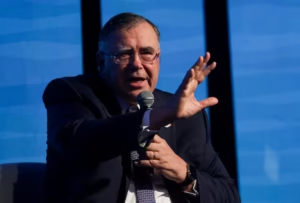
The country’s National Oil Corporation (NOC) revealed plans to host the first USA–Libya Energy Forum, intended to draw more U.S. investment into its oil and gas sector. The forum date is yet to be announced, but it marks a clear push to boost production with international support.
In recent months, Libya has actively sought partnerships with U.S. firms, signing a Memorandum of Understanding (MoU) with ExxonMobil and opening 22 new oil and gas blocks for the first time in 17 years. The government has also proposed a $70 billion strategic collaboration with Washington, covering energy, mining, and infrastructure, to secure financing and technical expertise.
These initiatives aim to help Libya reach 2 million barrels per day (bpd) by 2028. Its current output has already risen to 1.38 million bpd in August, reflecting steady growth.
Nigeria, producing around 1.5 million bpd, is seeking an OPEC quota increase to 2 million bpd by 2027. However, the country faces persistent challenges, including pipeline sabotage, delayed maintenance, and underinvestment, which could hamper production growth.
Despite political instability, Libya has shown stronger operational control and greater transparency. Analysts suggest that with stable governance and firm commitments from U.S. and European partners, Libya could exceed the 2 million bpd target sooner than expected. However, renewed political unrest could threaten these ambitions.
As Nigeria looks to convert technical gains into a formal OPEC quota increase at the November ministerial meeting, Libya’s resurgence signals an increasingly competitive landscape in Africa’s oil sector. Tripoli is positioning itself as a potential contender to surpass West Africa’s leading oil producer.