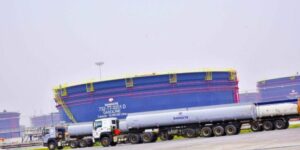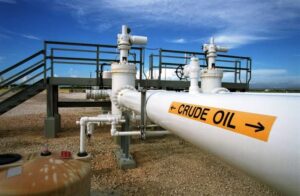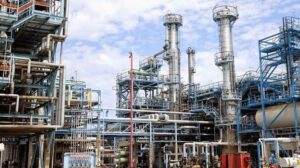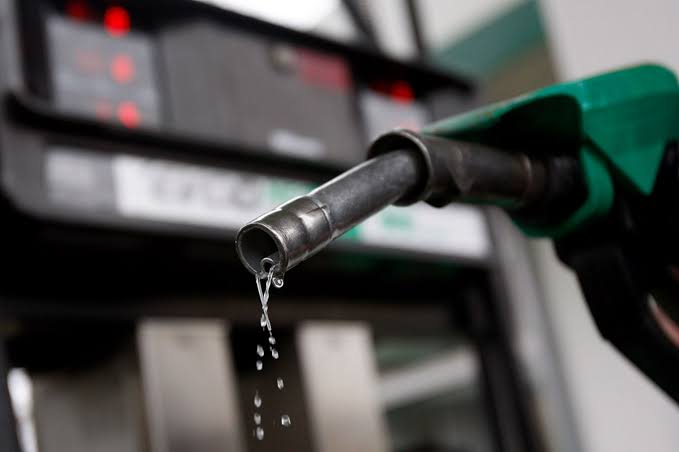
Nigeria recorded N998.5bn in revenue from petrol exports between January and June 2026, reflecting a major shift in the country’s refined petroleum trade as domestic refining capacity increases.
The National Bureau of Statistics reported that African countries accounted for N621.72bn of the export earnings during the first half of the year.
In the second quarter alone, Premium Motor Spirit generated N546.02bn in export revenue, making it Nigeria’s seventh-largest export for the period and accounting for 2.02 per cent of total exports.
Crude oil remained the country’s leading export at N12.91tn, while jet fuel generated N2.94tn, natural gas N2.82tn, urea N2.12tn, other petroleum gases N1.89tn and gas oil N1.32tn.
The latest figures mark a significant change from 2025, when Nigeria was still spending heavily on imported petrol.
The country spent N1.76tn importing PMS in the first quarter of 2025, when petrol did not feature among its major exports. However, PMS exports emerged in the second quarter, generating N85.83bn.
The N546.02bn recorded in the second quarter of 2026 therefore represents more than six times the value recorded in the corresponding quarter of 2025.
Analysts attributed the growth to increased production at the Dangote Petroleum Refinery, which has progressively raised output since beginning operations, as well as disruptions in international fuel markets.
Investment research analyst Abeeblahi Rufai said Nigeria had limited petrol available for export in early 2025 because domestic demand was absorbing the refinery’s output.
He said operational disruptions and maintenance involving the refinery’s Residue Fluid Catalytic Cracking unit also affected petrol production during the early stages of its ramp-up.
According to Rufai, increased refinery output later created a surplus for export, while disruptions to refined petroleum supplies from major producing regions opened up additional markets for Nigerian petrol.
He said African markets that traditionally sourced refined products from suppliers in the Middle East, Asia and Europe provided an opportunity for the Dangote refinery to expand its exports.
Rufai noted that the refinery’s location in Nigeria gave it a freight advantage in supplying African destinations because of shorter shipping distances compared with supplies from some overseas markets.
He also linked the stronger demand to disruptions in global energy flows following the conflict involving Iran, including restrictions around the Strait of Hormuz.
The resulting supply constraints in some international markets increased demand for refined petroleum products from alternative suppliers, including Nigeria, he said.
Senior Analyst at CardinalStone Securities, Tomiwa Adeniji, said the increase in refining capacity was helping Nigeria move away from its long-standing dependence on imported petroleum products.
She said Nigeria’s refining capacity had risen from about 400,000 barrels per day, operating at roughly one per cent utilisation before the Dangote refinery, to about 1.1 million barrels per day at an estimated 62 per cent utilisation.
Adeniji said the Dangote refinery began producing petrol in September 2024 but initially operated below its potential as production was being ramped up.
Economist and Chief Executive Officer of Economic Associates, Ayo Teriba, said the refinery initially focused on supplying the domestic market and reducing Nigeria’s dependence on imported petrol.
He said increased local production had subsequently created room for the export of petrol, diesel and aviation fuel, products that Nigeria previously imported in significant quantities.
Teriba said the development was changing the position of refined petroleum products in Nigeria’s trade figures, with products previously responsible for a significant portion of the import bill increasingly appearing among the country’s exports.
The growth in petrol exports could receive further support if crude oil production rises, providing additional feedstock for domestic refineries.
Minister of State for Petroleum Resources (Oil), Heineken Lokpobiri, said indigenous companies now account for about 60 per cent of Nigeria’s crude oil production.
He said international oil companies had increasingly shifted their operations towards deepwater assets after divesting from some onshore, swamp and shallow-water fields, with Nigerian companies taking over several of the divested assets.
Lokpobiri also disclosed that the number of active drilling rigs had increased from between 10 and 14 to more than 65.
He said Nigeria was targeting crude oil production of at least three million barrels per day in the coming years, a development that could further support domestic refinery operations and refined petroleum exports.