Nigeria’s crude oil production remained below its assigned quota from Organisation of the Petroleum Exporting Countries in March, extending a run of underperformance that has now lasted eight straight months.
Data contained in OPEC’s April Monthly Oil Market Report showed the country produced an average of 1.38 million barrels per day (mbpd) in March. Although this represented an improvement from February’s level, output still trailed the 1.5 mbpd ceiling allocated to Nigeria by about 117,000 barrels per day.
The February figure had marked a sharper drop from January’s performance, reversing earlier gains and widening the production gap. While Nigeria posted a modest rebound at the start of the year, the recovery proved short-lived as volumes dipped again in the following month.
Earlier statistics from the Nigerian Upstream Petroleum Regulatory Commission had also pointed to weakening output toward the end of 2025, with production easing in December before picking up slightly in January.
A review of last year’s trend shows that Nigeria failed to meet its OPEC allocation in most months of 2025, only matching or slightly surpassing the target a few times. The year began strongly, but output slipped below the quota as early as February and fluctuated for the rest of the period.
Industry watchers note that the first-quarter 2026 figures are also below the Federal Government’s budget assumptions, raising concerns about potential revenue shortfalls.
The chief executive of the upstream regulator recently stated that combined crude and condensate production reached 1.8 mbpd in March. However, officials clarified that the improvement was recorded toward the latter part of the month after several oil assets returned from maintenance. They expressed optimism that April’s output could align more closely with the OPEC benchmark.
Nigeria’s persistent inability to hit its target has implications beyond export earnings. Domestic refineries are said to be struggling with inadequate feedstock, affecting local refining capacity.
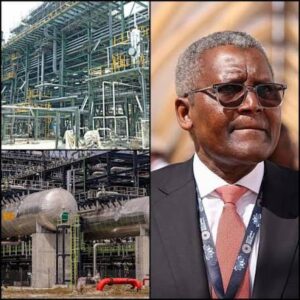
In response, the Nigerian National Petroleum Company Limited has begun sourcing crude from third-party international traders to ensure steady supply to the Dangote Petroleum Refinery and Petrochemicals FZE for processing.
Across the wider OPEC group, several producers recorded significant changes in output in March. While some members implemented deeper cuts, others posted modest increases. The report noted that full group totals were not compiled due to data limitations and rounding adjustments for certain countries.