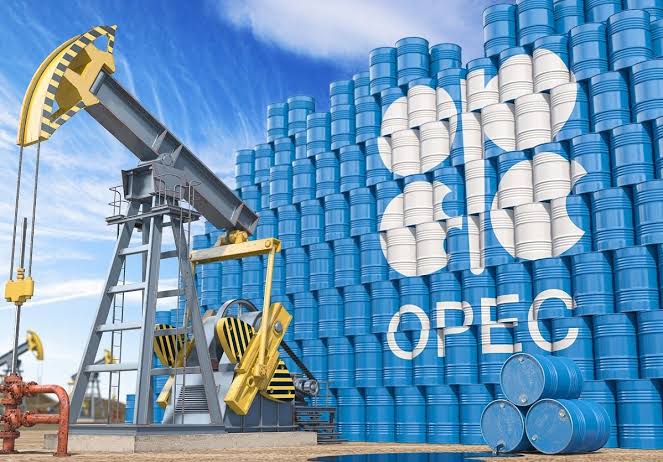
Nigeria has been excluded from a fresh round of oil output hikes by eight members of the Organisation of the Petroleum Exporting Countries and allies (OPEC+), deepening fears over its ability to meet budget targets amid crashing oil prices and mounting economic pressures.
A production schedule released by OPEC+ shows that Saudi Arabia, Russia, Iraq, the UAE, and five other oil giants will collectively raise oil production by 411,000 barrels per day (bpd) in June — marking a second straight month of output increases and a partial reversal of prior cuts.
“Nigeria must either boost its production to meet its energy security needs or consider exiting OPEC if the organisation remains unwilling to accommodate its situation,” said energy analyst Kelvin Emmanuel. “Africa’s energy security has never been at the heart of the interest of OPEC. The organisation is a Saudi-controlled lobby that works with the American government.”
Nigeria, which has faced persistent production shortfalls due to crude theft, underinvestment, and infrastructure issues, produced just 1.4 million bpd in March — short of its 1.5 million bpd OPEC quota.
The missed opportunity comes as Brent crude, Nigeria’s main export benchmark, plunged below $60 per barrel for the first time in four years. On Monday, Brent fell 6% to $59.39, while U.S. WTI dropped to $57.31 per barrel.“
The global oil price fall has compounded the challenges of oil theft, declining investment and low productivity in the oil sector,” said Olumide Akinyemi, economics professor at the University of Lagos.The price dip threatens Nigeria’s N28.7 trillion 2025 budget, which is based on a $75 per barrel benchmark and a naira-dollar exchange rate of N1,500.
The naira now trades around N1,600 to the dollar, adding to fiscal strain.Finance Minister Wale Edun signaled that the government may revise the national budget. “We are going back to the drawing board to look at our budget all over again,” he said.
In a bid to cushion the naira, the Central Bank of Nigeria injected $197.71 million into the foreign exchange market, promising to maintain liquidity and market stability.
Global banks have slashed oil price forecasts in response to OPEC+’s aggressive production moves and fears of a global slowdown.
Goldman Sachs cut its Brent forecast to $66, while Standard Chartered dropped its 2025 projection by $16 to $61.OPEC+ defended the decision, citing “healthy market fundamentals,” though analysts argue the group is leveraging production to reassert market dominance.
“By opening the taps, Saudi Arabia is reasserting control over rogue members while signalling readiness to let prices fall to discipline the market,” said Helima Croft, a leading OPEC watcher.