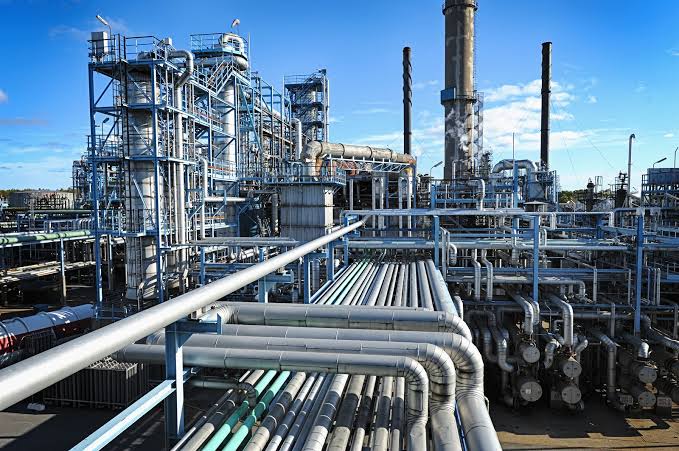
Nigeria will require an estimated $22 billion in new investments to develop major gas pipeline infrastructure as part of the Nigerian National Petroleum Company Limited’s Gas Master Plan 2026, according to details from the plan.
The document, recently unveiled in Abuja, outlines the scale of funding needed to expand gas transportation networks to support domestic use and boost export capacity. It notes that ongoing and proposed pipeline projects account for the bulk of the investment requirement.
The Gas Master Plan 2026 serves as Nigeria’s latest roadmap for harnessing its vast natural gas reserves to drive economic growth, industrialisation and energy security. It builds on the Nigerian Gas Master Plan introduced in 2008, which faced setbacks due to funding challenges, infrastructure gaps and weak execution.
Under the new plan, 60 priority gas projects have been identified. About 30 projects are expected to be completed within the next three years, while another 30 are scheduled for delivery over the next decade.
These projects are expected to significantly increase gas supply to power plants, industries, households and export facilities.
Unlike previous strategies, the 2026 plan places stronger emphasis on expanding gas production, strengthening infrastructure and improving linkages across key sectors such as liquefied natural gas, power generation, pipelines, compressed natural gas and industrial consumption.
The plan targets gas production of over 10 billion standard cubic feet per day by 2027, rising to 12bcf/d by 2030, and aims to attract more than $60 billion in investments across the gas value chain.
Despite holding Africa’s largest proven gas reserves estimated at 210 trillion cubic feet – Nigeria remains underperforming in global output, ranking 16th in gas production worldwide. The plan highlights this gap as evidence of significant untapped potential.
Nigeria’s gas reserves consist of roughly 48 per cent associated gas and 52 per cent non-associated gas. In 2025, total gas production stood at about 7.5bcf/d, but only around 60 per cent was commercialised. More than 10 per cent was flared, placing Nigeria among the world’s top gas-flaring countries, while nearly 30 per cent was reinjected.
Over the past five years, commercial gas output has remained between 4.1bcf/d and 4.7bcf/d, though domestic gas supply has improved, rising from 1.6bcf/d in 2021 to about 2.0bcf/d.
The plan also notes improved compliance with Domestic Gas Delivery Obligations, which increased from about 50 per cent five years ago to nearly 70 per cent in 2024.
However, projections indicate that gas demand will exceed supply by 2030, even under optimistic scenarios.
This, according to the plan, underscores the urgency of incentivising upstream investments, particularly in non-associated and deep-water gas projects, while prioritising sectors with the highest economic returns.
Nigeria currently operates more than 2,500 kilometres of gas pipelines, but the plan identifies the need for major expansions through projects such as the Ajaokuta–Kaduna–Kano pipeline and the OB3 pipeline, among others, to improve nationwide gas distribution.
Speaking at the Nigerian International Energy Summit, the Focal Person of the NNPC Gas Master Plan Implementation Assurance Team, Ekpei Ukam, said the new strategy adopts a market-led approach to gas development.
Ukam explained that NNPC is shifting away from isolated project execution to an integrated gas hub model, aimed at improving coordination, reducing costs and enhancing commercial viability. The plan identifies 23 existing gas hubs across the country to be developed in a more structured and coordinated manner.
He added that the plan balances domestic gas supply with export opportunities, allowing flexibility for gas hubs to serve either market depending on demand and commercial considerations.
According to Ukam, the clarity provided by the Petroleum Industry Act has strengthened the new plan, offering a clear regulatory framework that was lacking in previous gas development strategies.
He said an implementation assurance framework has also been established to track progress across joint ventures and upstream infrastructure projects, ensuring gas moves efficiently from production to end users.