Nigeria’s crude oil production fell short by an estimated 46.4 million barrels in the first four months of 2025, posing a significant threat to the country’s 2025 fiscal budget, according to data from the Nigerian Upstream Petroleum Regulatory Commission (NUPRC).
The analysis revealed actual crude output stood at 200.8 million barrels between January and April, compared to a projected 247.2 million barrels, marking an 18.7 percent deficit.
This shortfall translates to an average daily production of about 1.6 million barrels, far below the 2.06 million barrels per day benchmark set in the 2025 budget.“At 2.06 million barrels per day, Nigeria should produce roughly 61.8 million barrels monthly, but actual figures have consistently lagged behind,” the report noted.
The 2025 federal budget, pegged on an oil price of N75 per barrel and the 2.06 million bpd production target, faces pressure as Nigeria grapples with declining production and falling global oil prices. This production shortfall has caused an estimated revenue loss of $3 billion, based on an average Brent price of $65 per barrel this year.
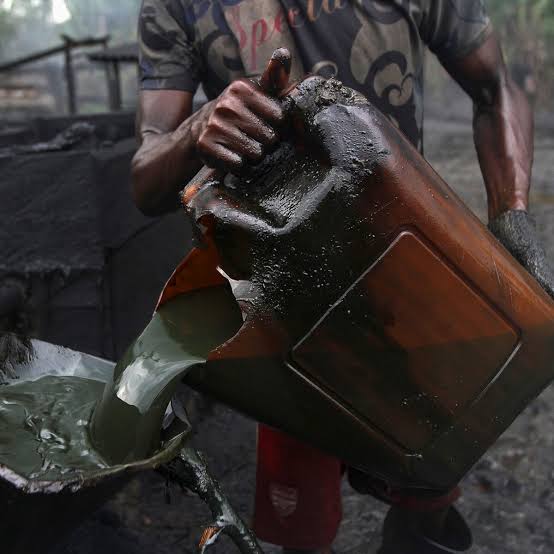
Factors contributing to the decline include increased global oil output by non-OPEC countries, slowing demand due to economic uncertainties, and domestic challenges such as oil theft, pipeline sabotage, and infrastructural deficits.
“Oil theft peaked at about 108,000 barrels per day in 2022, though government efforts have reduced these losses,” the analysis stated.Regional production data showed drops in key terminals: Bonny output fell from 8.1 million barrels in January to 7.4 million in April; Brass declined from 1 million to 747,000 barrels; and Qua Iboe decreased from 4.6 million to 4.3 million barrels in the period.
Despite these setbacks, Nigeria remains heavily dependent on crude exports, which account for around 90 percent of its export earnings. This dependence leaves the economy vulnerable to global oil price swings and domestic production challenges.
To cushion the fiscal impact, the Lagos Chamber of Commerce and Industry (LCCI) recently urged the federal government to reassess the 2025 budget in light of the shortfall.On a brighter note, Nigeria’s non-oil sector contributed 94.49 percent to GDP growth in 2024, supported by strong performances in services, agriculture, and industry.
The government is also working to boost federal revenue through improved tax administration and foreign exchange unification, efforts that increased revenue from N6.8 trillion in 2023 to N12.4 trillion in 2024.
With global and domestic pressures mounting, Nigeria’s oil production outlook remains a key factor in the nation’s economic stability going forward.