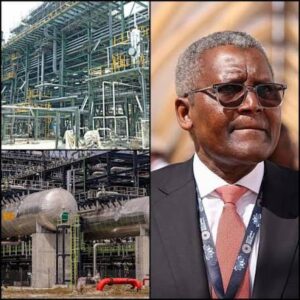
The Nigerian Midstream and Downstream Petroleum Regulatory Authority is considering its legal options following a Federal High Court order restricting the regulator from interfering with operations at the Dangote Petroleum Refinery in Lagos.
The dispute centres on whether the NMDPRA has regulatory powers over petroleum facilities operating within free trade zones.
The Federal High Court in Lagos recently issued an interim injunction preventing the authority from shutting down or disrupting activities at the Dangote refinery, which operates within the Lekki Free Zone.
The order followed an application by Dangote Petroleum Refinery Nigeria Limited after the company received a directive from the NMDPRA dated August 24, 2026, concerning the loading and truck-out of petroleum products from its facility.
Justice Akintayo Aluko granted the interim relief after considering the refinery’s application, supporting documents and arguments presented before the court.
The refinery argued that the petroleum regulator does not have oversight authority over activities conducted within free zones. The court also considered a March 2026 position from the Attorney-General of the Federation which, according to the ruling, indicated that the NMDPRA did not have regulatory jurisdiction over operations in free zones.
The NMDPRA has yet to publicly disclose whether it will challenge the interim order. Its spokesperson, George Ene-Ita, declined to comment further, citing the fact that the matter is before the court.
However, senior officials within the agency indicated that its management and legal team were reviewing the ruling before deciding on the next step.
The disagreement comes despite the regulator’s earlier position that petroleum companies operating in free zones remain subject to the Petroleum Industry Act.
In a circular issued in May, the NMDPRA maintained that companies involved in refining, petroleum processing, storage, transportation, importation, exportation and other midstream and downstream activities must comply with the PIA and regulations issued under it, regardless of whether their facilities are located within free zones or other designated areas.
The authority argued that its jurisdiction covers petroleum operations across Nigeria, including free zones, export processing zones, industrial areas, territorial waters and the country’s exclusive economic zone.
Dangote Refinery, however, is seeking broader protection from regulatory interference while its substantive case is determined. Among other requests, the company asked the court to prevent the NMDPRA and its representatives from entering, sealing, restricting access to or disrupting its refinery, storage, terminal, loading and related facilities within the Lekki Free Zone.
The court has adjourned the matter to September 9, 2026, for hearing of the refinery’s motion on notice.
The outcome could have wider implications for the petroleum industry, particularly for oil and gas companies operating from Nigeria’s various free and special economic zones. A decision on the regulator’s authority could also clarify the relationship between the incentives granted to free-zone businesses and compliance with sector-specific laws.