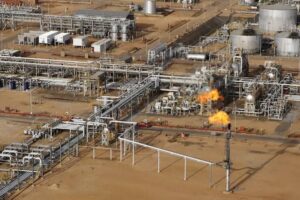
The Nigerian National Petroleum Company Limited (NNPC Ltd.) has held talks with a Chinese energy company on potential investments in crude oil production, natural gas development and energy infrastructure.
The discussions took place when NNPC hosted a delegation from China North Industries Group Corporation Limited (NORINCO Group) on Friday to explore areas of cooperation, including gas commercialisation, oil trading, technology and investment.
The delegation was led by Zuxi Huang, Vice President of China Zhenhua Oil Company Limited, a subsidiary of NORINCO Group. They were received by NNPC’s Group Chief Financial Officer, Dapo Segun, and Executive Vice President for Gas, Power and New Energy, Olalekan Ogunleye, alongside other senior officials who participated virtually.
NNPC disclosed the meeting in a post on its official X account over the weekend, stating that both parties discussed their business priorities and possible areas of collaboration.
According to the company, a potential partnership could support higher crude oil and gas production, strengthen its operations and improve Nigeria’s energy security.
The engagement comes as Nigeria seeks more foreign investment and technical expertise to expand its energy infrastructure and increase the utilisation of its natural gas resources.
NNPC has previously collaborated with Chinese companies on energy-related projects. One example is the Abuja Independent Power Plant project, which involved China Machinery Engineering Corporation and GE Vernova.
Meanwhile, the Organisation of the Petroleum Exporting Countries (OPEC) has reported that taxes represented 48 per cent of the average retail price of petroleum products across the 38 member countries of the Organisation for Economic Co-operation and Development (OECD) in 2025.
Crude oil accounted for 33 per cent of the average pump price, while industry margins made up the remaining 19 per cent, according to OPEC.
In Nigeria, petrol prices are largely influenced by the cost of products at refineries or import landing points, alongside distribution expenses and other margins. Taxes generally account for a smaller share of pump prices than in many OECD countries.
The government has also maintained several tax and duty waivers on petroleum products, while a proposed fuel levy remains on hold.