Nigeria’s active oil rigs have risen to more than 70 from fewer than 10 in 2023, pointing to increased drilling activity and renewed investor interest in the country’s upstream petroleum sector.
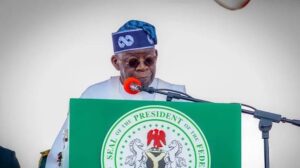
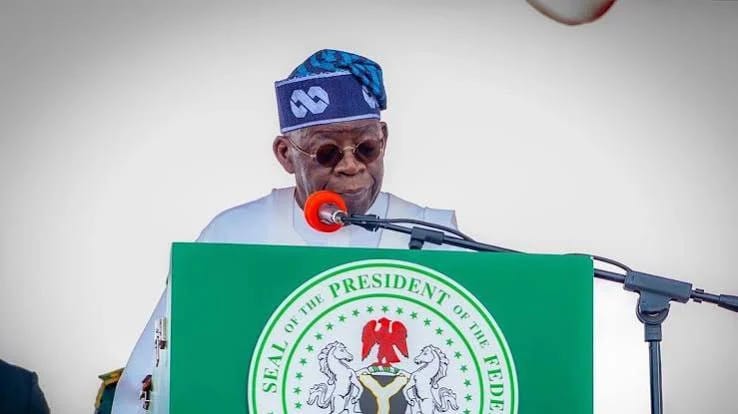
President Bola Tinubu disclosed the development at the fifth anniversary of the Nigerian Upstream Petroleum Regulatory Commission in Abuja, where he said reforms in the oil industry and improved security had helped strengthen investor confidence.
Represented by Vice President Kashim Shettima, Tinubu said investors who had previously moved their capital away from Nigeria were returning as the country became more attractive for upstream petroleum investment.
He said the government would continue to encourage investment in the sector while reducing the economy’s dependence on crude oil revenue.
According to the President, petroleum remains important to Nigeria because it provides energy, foreign exchange and revenue for government programmes. However, he said the administration was also expanding opportunities in agriculture, manufacturing, digital technology and the creative industry.
Tinubu identified natural gas as a major driver of Nigeria’s next phase of economic growth, saying the government would increase gas supply to industries, power plants and households while reducing gas flaring and supporting cleaner cooking.
He also called on oil companies benefiting from government incentives to fulfil their commitments, particularly in areas of production activities, local content, environmental protection and host community development.
The President further directed the upstream regulator to make its processes more transparent and predictable, citing concerns over high operating costs, lengthy contracting procedures and uncertainty around fiscal terms for complex projects.
Minister of State for Petroleum Resources (Oil), Heineken Lokpobiri, said the increase in drilling activity had also been accompanied by higher crude oil production.
He disclosed that Nigeria was producing 1.821 million barrels per day, compared with less than one million barrels per day before the Tinubu administration.
Lokpobiri described the increase in active rigs as evidence of stronger activity in the sector and urged the country to attract more investment through exploration, licensing rounds and a competitive regulatory environment.
The Chief Executive Officer of the NUPRC, Oritsemeyiwa Eyesan, said Nigeria attracted 38 per cent of upstream capital sanctioned in Africa in 2025, compared with four per cent in 2021.
She added that the commission had approved 120 Field Development Plans since 2024, representing more than $4.7 billion in capital commitments.
Eyesan said the projects were expected to generate government revenue, create jobs, strengthen local content and improve energy security.
She said NUPRC was targeting oil production of three million barrels per day and gas production of 12 billion cubic feet per day by 2030.
Minister of State for Petroleum Resources (Gas), Ekperikpe Ekpo, also described Nigeria’s gas reserves as a major opportunity for industrialisation, electricity generation and domestic energy supply.
He called for stronger regulatory predictability and faster approvals to encourage investment in gas development.