The House of Representatives has revealed that the Petroleum Industry Act (PIA), passed in 2021, has attracted over $16 billion in fresh investments into Nigeria’s oil sector within two years of its enactment. Deputy Speaker Benjamin Kalu described the Act as a game-changer that has boosted investor confidence and helped revive oil production across the country.
Speaking at a stakeholder forum in Abuja, Kalu—represented by lawmaker Ikenga Ugochinyere—highlighted that oil production rose to 1.69 million barrels per day by the end of 2024, the highest in nearly four years. He also noted that Nigeria secured three out of four major international investment decisions in Africa’s oil and gas sector last year.
Despite this progress, lawmakers voiced concern over massive daily losses due to crude oil theft. They estimate that Nigeria loses $79.4 million (over ₦121 billion) every single day, a situation that poses a serious threat to national revenue and energy security.
Kalu stressed that curbing oil theft is essential for Nigeria to fully benefit from the PIA, urging better legislative oversight and closer collaboration with regulators to tackle the issue.
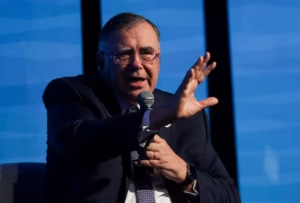
At the same event, the Nigerian Midstream and Downstream Petroleum Regulatory Authority (NMDPRA) said it is working on regulatory reforms to reduce bureaucracy and improve business conditions. Executive Director Ogbugo Ukoha said the agency is streamlining overlapping regulations to create a more investment-friendly environment.
Legal practitioners were also advised to get acquainted with the PIA’s licensing framework, which includes over 17 different permits. NMDPRA’s Secretary, Joseph Tolorunse, emphasized the need for legal teams to support compliance and align operations with evolving industry rules.
The forum emphasized the importance of regulatory, legal, and legislative synergy in moving Nigeria’s oil and gas sector forward under the PIA framework.