Nigerian manufacturers spent N1.34tn on alternative electricity in 2025 as persistent power shortages forced businesses to increasingly rely on self-generation to keep their factories running.
Data from the Manufacturers Association of Nigeria showed that the expenditure increased by about 21 per cent from N1.11tn recorded in 2024, highlighting the rising cost of unreliable electricity to the industrial sector.
Manufacturers’ spending on alternative power has increased significantly over the past decade. It stood at N25bn in 2014 before rising to N59bn in 2015 and N129.95bn in 2016.
Although the figure declined in subsequent years, it began a sharp upward trend from 2022, when manufacturers spent N144.5bn. The amount jumped to N781.7bn in 2023 and crossed the N1tn mark in 2024.
The worsening power situation has prompted several manufacturers to rely on gas, diesel and low-pour fuel oil to power their operations, reducing their dependence on electricity distribution companies.
According to the Manufacturers Association of Nigeria, average daily electricity supply to manufacturers fell from 16.7 hours in the first half of 2025 to 13.1 hours in the second half of the year.
The decline has added to the pressure on manufacturers already dealing with high production costs, weak consumer purchasing power, logistics challenges and expensive financing.
Several major companies have developed their own power-generation capacity to maintain production. Data from the Nigerian Electricity Regulatory Commission showed that Pure Flour Mills Limited in Rivers State obtained approval to generate 546 megawatts in 2025.
United Cement Company of Nigeria Limited has a generation capacity of 105MW, while Flour Mills of Nigeria and Lafarge Cement WAPCO Nigeria have capacities of 70MW and 90MW respectively.
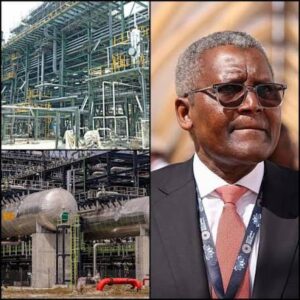
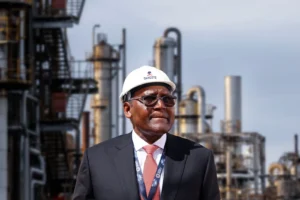
Dangote Industries Limited generated about 1,500MW of electricity in 2025, according to its President, Aliko Dangote. The Dangote refinery alone operates a 435MW power plant.
Industry estimates have previously placed manufacturers’ self-generation capacity at more than 13,000MW, with analysts suggesting that the figure could have risen as more companies seek alternatives to unreliable grid electricity.
The high cost of energy has also contributed to the closure of some manufacturing businesses.
Louis Carter Industries, a plastics manufacturer, cited high energy expenses and difficulty obtaining raw materials among the challenges that affected its operations.
Mothers Pride Ventures, which produced pet bottles, nylon and plastic containers in Asaba, Delta State, shut down in 2018 after operating for more than five years. Its former managing director, Jimoh Dayo, blamed the company’s collapse partly on unreliable electricity supply from the Benin Electricity Distribution Company.
The Chief Executive Officer of the Centre for the Promotion of Private Enterprise, Muda Yusuf, said unreliable electricity remained one of the major obstacles to industrial productivity in Nigeria.
He noted that manufacturers were being forced to spend heavily on self-generated power, which weakens their competitiveness and reduces profitability.
Yusuf called for reforms that would provide reliable and affordable electricity, while urging increased investment in transportation infrastructure and better access to long-term financing for manufacturers.
Manufacturers have also challenged electricity distribution companies and the Nigerian Electricity Regulatory Commission over higher electricity charges, warning that rising tariffs could place additional pressure on businesses.
MAN President, Segun Ajayi-Kadir, said improving energy supply, stabilising the economy and providing affordable financing would be crucial to sustaining industrial growth and improving productivity.