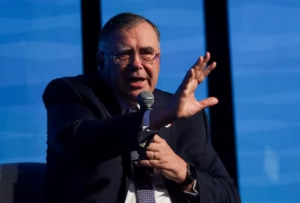
Russia is once again weighing tax hikes as a sharp decline in oil and gas revenues blows a hole in the federal budget, according to Andrey Makarov, Chairman of the State Duma Budget Committee.
The Russian Ministry of Finance now expects to collect 8.3 trillion roubles (approx. US$104.6 billion) in oil and gas taxes by year-end — a staggering 2.6 trillion roubles (US$32.8 billion) below target.
Total federal revenues are also projected to fall short by 1.8 trillion roubles, pushing the deficit to nearly 3.8 trillion roubles (US$47.9 billion) — the largest since the COVID-19 crisis.Makarov confirmed that lawmakers have considered raising taxes on banks and oil companies, but dismissed both as unfeasible.
“Oil companies can no longer pay taxes because they are under sanctions,” he said.“Banks have also become targets of Western restrictions and their stability depends on the security of the entire economy.”
Even revised forecasts now appear unrealistic.“The updated budget plan still looks too optimistic,” Makarov admitted.
The government has already taken steps in recent years to boost revenue, including a “tax on overprofits,” new exchange rate duties for large businesses, and higher levies on the energy sector — largely to support a ballooning military budget.
Meanwhile, Russian oil exports continue to struggle. In April, revenue from crude oil and oil product exports fell to US$13.2 billion — the lowest in nearly two years.
The Kremlin now faces a tough balancing act as it seeks to plug the budget gap without overburdening an already strained economy.