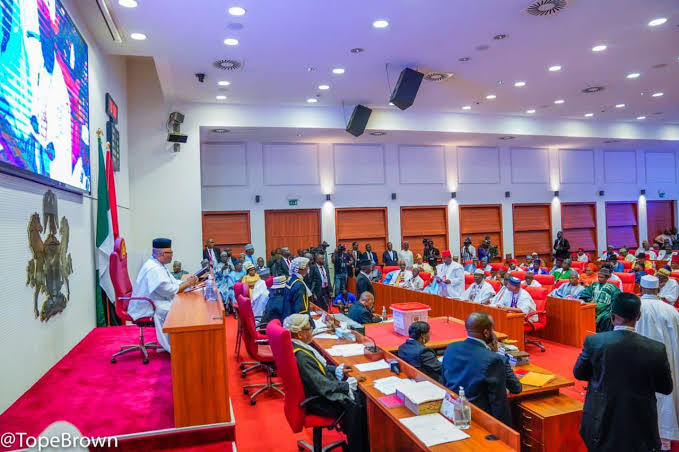
The Senate Public Accounts Committee has directed the external auditors of the Nigerian National Petroleum Company Limited (NNPC Ltd.) to provide a detailed explanation of over ₦210 trillion recorded in the company’s audited financial statements within one week.
The lawmakers issued the directive during an ongoing review of NNPC’s audited accounts, focusing on unresolved entries amounting to about ₦107 trillion in receivables and ₦103 trillion in payables.
Committee members expressed concern that despite previous engagements with NNPC officials, the figures had not been fully reconciled or adequately explained. They stressed that while the money had not been declared missing, the transactions behind the entries remained unclear.
During the hearing, representatives of the audit firm requested additional time to retrieve documents supporting the disputed figures, explaining that the records formed part of their audit working papers. They also argued that NNPC, as their client, was better positioned to provide detailed explanations.
The request was rejected by the committee, which maintained that auditors who certified the financial statements should already have immediate access to the supporting schedules used in their audit.
Committee Chairman, Senator Ibrahim Dankwambo, questioned why the auditors were unable to produce documents showing how the figures were derived, insisting that every amount contained in audited financial statements must be backed by detailed records.
Lawmakers also reminded the auditors that the National Assembly has constitutional powers to compel the production of documents relevant to its investigations. They stressed that professional confidentiality could not prevent compliance with a lawful request from Parliament.
Senator Abdul Ningi said the committee had the authority to summon individuals and request any documents necessary for its investigation, adding that the auditors were appearing before the panel in their professional capacity and were expected to defend the audit opinions they had issued.
Senator Adams Oshiomhole also insisted that the figures attracting public attention originated from the auditors’ work, making them responsible for explaining the basis of the certified accounts without referring the committee back to NNPC.
Some lawmakers further questioned the credibility of the audit process, arguing that the inability to immediately present supporting schedules raised concerns about the quality of the audit.
The committee noted that previous explanations by NNPC officials suggested the receivables and payables were linked to joint venture cash calls and related payments. However, lawmakers said the company had not identified the specific transactions or counterparties involved, making it impossible to reconcile the entries.
According to the committee, if the receivables and payables relate to the same transactions, they should be properly matched and reconciled in the financial statements.
The lawmakers also dismissed claims that commercial confidentiality prevented disclosure of the records, arguing that NNPC is wholly owned by the Federal Government and remains accountable to Nigerians through the National Assembly.
Dankwambo warned that failure by auditors to adequately defend audited accounts could damage their professional reputation, citing global accounting scandals as examples of the consequences of weak audit oversight.
At the end of the session, the committee ordered the auditors to return within one week with a comprehensive breakdown of the ₦107 trillion receivables and ₦103 trillion payables, including detailed schedules showing the composition of each figure and the basis for their certification.
The Senate reiterated that its concern is not that the funds are missing, but that the amounts remain unexplained until they are fully reconciled as part of its ongoing investigation into NNPC’s financial records.