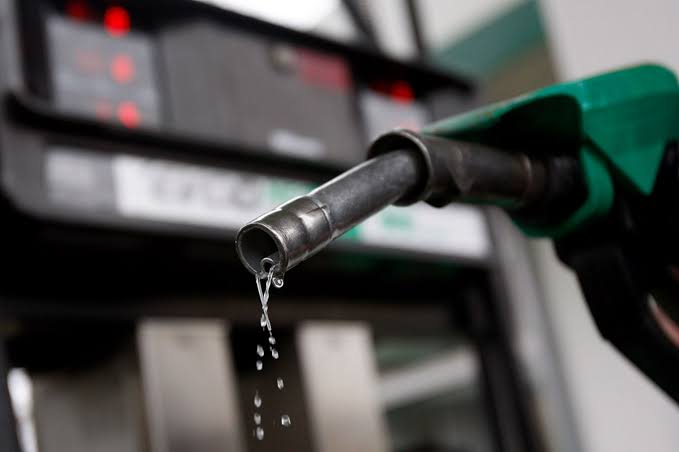
Nigerians spent about N11.3 trillion on petrol between January and July 2026, despite a significant decline in fuel consumption during the period.
Data from the Nigerian Midstream and Downstream Petroleum Regulatory Authority showed that about 10.37 billion litres of Premium Motor Spirit were supplied to the domestic market within the seven-month period. The total expenditure was calculated from the monthly volumes and prevailing average pump prices.
The monthly cost of petrol remained above N1 trillion throughout the period as prices increased from the beginning of the year.
Petrol averaged N830 per litre in January and February before rising to N1,100 in March, N1,250 in April and N1,300 in May. The average price later eased to N1,200 per litre in June and July.
Despite the higher prices, petrol demand weakened considerably. Nigerians consumed about 1.87 billion litres in January, costing approximately N1.55 trillion, while February consumption fell to 1.59 billion litres, with expenditure standing at about N1.32 trillion.
In March, consumption dropped further to 1.47 billion litres, but the higher pump price pushed the monthly petrol bill to about N1.61 trillion. April recorded expenditure of N1.92 trillion on 1.53 billion litres, while consumers spent approximately N1.87 trillion on 1.44 billion litres in May.
Petrol consumption fell to about 1.42 billion litres in June, with Nigerians spending N1.71 trillion. July recorded the lowest volume for the seven-month period at approximately 1.11 billion litres, yet the bill remained high at N1.33 trillion.
The decline was particularly sharp in July, when average daily petrol consumption fell to 35.7 million litres. This represented a 24.7 per cent drop from the 47.4 million litres consumed daily in June and was also 24.4 per cent lower than the 47.2 million litres recorded in July 2025.
July’s figure was 44 per cent below the 63.7 million litres per day recorded at the consumption peak in December 2025 and 28.6 per cent below the 50 million litres daily benchmark for petrol demand.
The contraction in petrol demand contrasted with consumption trends for some other petroleum products.
Diesel demand reached 14.7 million litres per day in July, above the 14 million-litre benchmark, while Liquefied Petroleum Gas consumption stood at 4.4 kilotonnes per day, exceeding its 3.9-kilotonne benchmark.
Aviation fuel recorded the opposite trend, with daily consumption at 1.7 million litres, 43.3 per cent below its three million-litre benchmark.
The high petrol expenditure has renewed calls for government intervention to reduce the impact of fuel prices on households and businesses.
Energy experts and economists have supported proposals for targeted measures to cushion the effects of the removal of petrol subsidies, while cautioning against returning to the previous blanket subsidy system.
Petroleumprice.ng Chief Executive Officer, Olatide Jeremiah, argued that petrol prices were too high for many Nigerians and suggested that part of government revenue from crude oil could be used to support petroleum product prices.
Energy economist Prof. Adeola Adenikinju, however, said production-focused support would be preferable to consumption subsidies. He also called for stronger mass transportation systems to reduce the pressure of high transport costs on households.