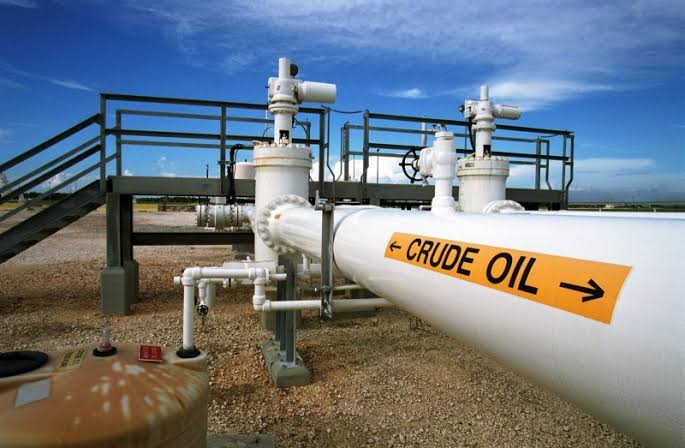
The Federal Government has introduced a new security framework to strengthen the protection of Nigeria’s oil and gas infrastructure, following the recovery of more than 2.4 million barrels of stolen crude oil.
The framework, developed by the Office of the National Security Adviser (ONSA), sets out procedures for coordinating security agencies, private surveillance contractors and other stakeholders involved in securing petroleum facilities.
The initiative is also aimed at tackling crude oil theft, pipeline vandalism and illegal refining, which have contributed to production losses, reduced government revenue and environmental damage.
Speaking at the launch in Abuja on Monday, the National Security Adviser, Nuhu Ribadu, said the framework would establish clearer responsibilities, improve information sharing and reduce conflicts among agencies operating in oil-producing areas.
He said its development involved consultations with the Armed Forces, intelligence and security agencies, the Nigerian National Petroleum Company Limited (NNPC Ltd.), regulators and private security contractors.
According to NNPC, collaboration among industry stakeholders has resulted in the shutdown of more than 10,000 illegal refineries and refining sites, the removal of nearly 7,000 illegal pipeline connections and the arrest of over 3,700 suspects.
Representing NNPC Group Chief Executive Officer Bashir Bayo Ojulari, Dahiru Gwarzo said coordinated security operations were essential to protecting national revenue, maintaining production, attracting investment and safeguarding communities around oil and gas facilities.
He recalled that Nigeria’s crude oil production dropped to about 950,000 barrels per day in August 2022, when disruptions to major pipelines significantly affected deliveries to export terminals.
The experience, he said, demonstrated the need for stronger cooperation among operators, regulators and security agencies. He added that a round-the-clock command and control centre had supported joint efforts to recover stolen crude and dismantle illegal refining operations.
Also speaking at the event, the representative of the Minister of Defence, Olufemi Akinjobi, said common operating procedures would strengthen cooperation and reduce risks during security operations.
The Commandant-General of the Nigeria Security and Civil Defence Corps, Abubakar Audi, said the framework would also improve accountability among personnel assigned to protect petroleum infrastructure. He disclosed that about 100 officers had been sanctioned for misconduct, adding that the corps would align its activities with the new guidelines.
Meanwhile, the Chief Executive Officer of the Nigerian Financial Intelligence Unit, Hafsat Abubakar Bakari, called for effective monitoring and a feedback system to assess how well the framework was being implemented.
The new procedures are expected to standardise activities such as surveillance, arrests, detention and the handling of recovered petroleum products, while clarifying the responsibilities of participating institutions.
However, the success of the framework will depend on consistent implementation, accountability and sustained cooperation among the agencies and industry stakeholders responsible for protecting Nigeria’s oil and gas assets.