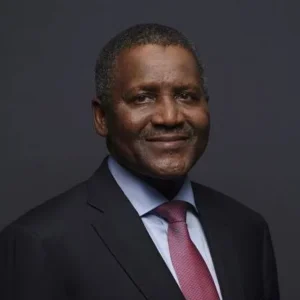
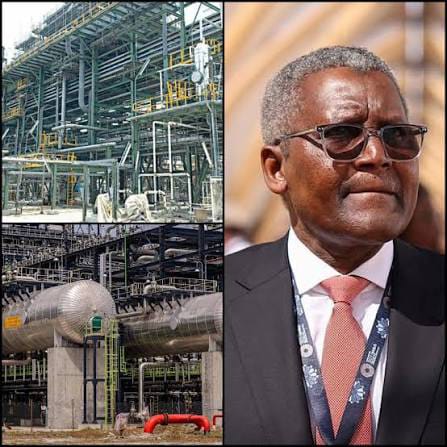
Dangote Industries Limited has acquired a 25 per cent stake in a petroleum products pipeline network in Kenya as part of its strategy to expand fuel distribution infrastructure across Africa.
The company’s President, Aliko Dangote, disclosed this at the Financial Times Africa Summit 2026 in London, United Kingdom, during a discussion with the Financial Times Africa Editor, David Pilling.
Dangote said the acquisition was completed with support from Kenyan President William Ruto, adding that the group was pursuing similar investments in Djibouti, Ethiopia, Cameroon and Namibia to improve the transportation and storage of refined petroleum products across the continent.
He said the company was developing a distribution route connecting Djibouti to Addis Ababa, Ethiopia’s capital, supported by storage facilities for petroleum products.
In Cameroon, Dangote said another distribution project was nearing completion, while Namibia was being considered as a strategic entry point into Southern African markets.
According to him, refined products from the Dangote Petroleum Refinery in Lagos could reach Namibia by sea in approximately four days. From there, the company plans to supply other markets, including Botswana and South Africa.
The group is also considering distribution routes through Zimbabwe and Zambia to establish a wider network serving multiple African countries.
The expansion complements Dangote’s proposed investment in a refinery in Lamu, Kenya, with a planned processing capacity of about 700,000 barrels per day.
Dangote said East Africa’s industrial activities, mining operations and rising demand for energy influenced the decision to invest in the region. He noted that businesses in the area continued to face challenges accessing diesel and other petroleum products.
He explained that the proposed refinery would obtain crude oil from multiple sources rather than rely solely on supplies from Kenya or Uganda. The Lamu location was selected after technical assessments of several sites, with deep-water access, marine infrastructure and water availability among the major considerations.
Dangote also alleged that commercial interests had attempted to obstruct the refinery project through legal action shortly before its public announcement.
Beyond petroleum investments, the industrialist called on African governments to strengthen policies that support local manufacturing and protect domestic industries from unfair foreign competition.
He warned that excessive dependence on imported goods could undermine local production, reduce employment opportunities and weaken economic development across the continent.
Dangote disclosed that his group had earmarked approximately $50bn for investments between 2026 and 2030, with the objective of expanding its businesses and supporting Africa’s industrial development.
He identified inadequate electricity supply as another major obstacle, particularly for mining and mineral-processing industries that require reliable power to transform raw materials into higher-value products.
Dangote noted that about 650 million Africans lacked access to electricity, arguing that improved power infrastructure would help stimulate manufacturing, create jobs and diversify national economies.
He maintained that Africa’s abundant natural resources, agricultural potential and youthful population provided a strong foundation for industrial growth, but stressed that governments and businesses needed to work together to translate these advantages into prosperity.