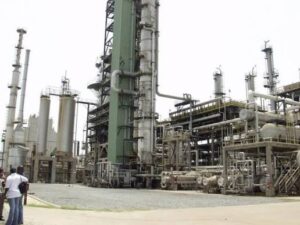

The Federal Government will begin reclaiming oil blocks from licence holders who have failed to develop their assets within the approved timelines, with the exercise scheduled to start next week.
The Nigerian Upstream Petroleum Regulatory Commission (NUPRC) Chief Executive, Oritsemeyiwa Eyesan, announced the plan on Tuesday during a two-day workshop in Lagos for holders of Petroleum Prospecting Licences awarded in the 2022/2023 and 2024 licensing rounds.
Eyesan said the commission had directed that undeveloped assets be recovered by October 31, warning that companies would no longer be allowed to hold oil blocks indefinitely without making progress towards exploration and production.
Under the existing requirements, operators are expected to commence activities within three years for onshore assets and five years for offshore blocks.
The commission said the planned revocations were intended to address delays in developing petroleum assets and ensure that oil blocks are held by companies capable of putting them into productive use.
Eyesan explained that some operators struggled to advance their projects after winning licences because they lacked the technical expertise, funding or partnerships needed to develop the assets.
She said some successful bidders assembled technical teams to support their applications but disbanded them after securing the licences. They subsequently spent considerable time seeking new partners and financing before requesting extensions from the regulator.
The NUPRC chief executive warned that difficulties in securing funding or technical partners would not automatically justify additional time, adding that extensions would be assessed rather than granted as a matter of course.
She urged newly licensed operators to establish the technical, financial and managerial capacity required to develop their assets before committing to the business.
According to Eyesan, acquiring an oil block involves more than meeting the financial requirements of a licensing round, as operators must also possess the expertise and organisational structure needed to move projects from exploration to production.
The commission has also reviewed the performance of companies that acquired assets during previous licensing rounds and through divestments by international oil companies.
Eyesan said the results had varied, with some indigenous operators increasing output from previously underdeveloped fields, while production from other acquired assets had declined.
The planned exercise is expected to put pressure on licence holders who have failed to meet their development obligations and create opportunities for more capable investors to develop the affected oil blocks.