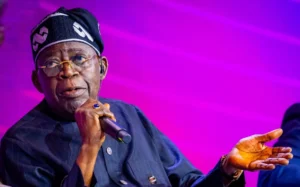
President Bola Tinubu has pledged to restore Nigeria’s three state-owned refineries, saying the government intends to make them commercially viable despite the expansion of private refining capacity.
The President made the commitment at the 20th OTL Africa Downstream Energy Week in Lagos on Monday. He was represented at the event by the Permanent Secretary of the Ministry of Petroleum Resources, Patience Oyekunle.
The Port Harcourt, Warri and Kaduna refineries, operated by the Nigerian National Petroleum Company Limited, have remained largely inactive despite billions of naira spent on maintenance over the years.
However, the current NNPC management has signed a memorandum of understanding with two Chinese companies as part of efforts to rehabilitate the facilities.
Tinubu said the government would adopt a more commercially focused strategy for their restoration, supported by technical assessments, partnerships and stricter operational management.
He added that Nigeria’s goal was to process more of its crude oil locally, retain greater economic value at home and become a reliable supplier of refined petroleum products to other African countries.
The President said reforms introduced under the Petroleum Industry Act were intended to improve transparency, attract investment and make the petroleum sector more commercially sustainable.
He also pointed to the growth of private refining as a major development in the industry, particularly the Dangote Petroleum Refinery, which he said had reached its installed capacity of 650,000 barrels per day.
According to Tinubu, expanding refining capacity could improve Nigeria’s chances of exporting refined products and supplying regional markets, reducing the country’s longstanding dependence on imported fuel.
He said the government’s plans went beyond crude oil production and included developing petrochemicals, gas processing and other industries that could create jobs, attract investment and support manufacturing.
Tinubu also urged companies operating across the oil and gas value chain to invest more in local technology, infrastructure, skills development and Nigerian businesses.
He stressed that oil and gas operators should contribute to environmental protection and the development of communities where they operate, adding that resource extraction should deliver wider economic benefits.
The President further encouraged investors with the necessary technical expertise and financial capacity to explore opportunities in Nigeria’s petroleum industry.
Meanwhile, Chairman of the OTL Advisory Board, Adetunji Oyebanji, said Africa’s downstream petroleum sector had expanded since the organisation began in 2007, particularly in refining, logistics and market liberalisation.
Oyebanji also noted that the emergence of large-scale private refining in Nigeria had changed the outlook for domestic fuel supply and regional petroleum trade.