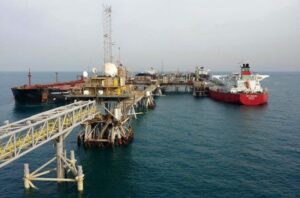
The Nigeria Upstream Petroleum Regulatory Commission (NUPRC) is facing mounting criticism after reports revealed that about 60 million barrels of crude oil meant for local refineries have been diverted and remain unsold on international waters.
Under the Petroleum Industry Act (PIA), International Oil Companies (IOCs) are required to fulfill Domestic Crude Supply Obligations (DCSO) by supplying Nigerian refineries. However, multiple sources indicate that these companies have rerouted the crude to traders in Asia, the Mediterranean, and Southern Africa—who then resell it back to Nigerian traders at inflated prices.
Reacting to the issue, NUPRC Chief Executive Gbenga Komolafe admitted, “The diversion of crude oil cargoes designated for domestic refineries is a contravention of the law. The commission will henceforth disallow export permits for such cargoes.”
Despite this assurance, industry stakeholders argue that NUPRC’s delayed action has severely hurt local refinery operations. The Crude Oil Refinery Owners Association (CORAN), speaking through spokesperson Eche Idoko, said, “Crude oil supply shortages and high costs have stalled the progress of at least seven local refineries… Until recently, Nigeria wasn’t even meeting its OPEC production quotas.”
Analysts and CORAN have blamed NUPRC for failing to enforce the PIA, saying the commission’s inaction has allowed IOCs—many of which operate under joint ventures with the Nigerian National Petroleum Company Limited (NNPCL)—to breach agreements with impunity. “Why should IOCs that are adequately compensated under JV agreements be allowed to deny our local refineries the product they are paid upfront to produce?” one analyst questioned.
The editorial calls for urgent action, warning, “Nigerians will not continue to tolerate a situation where foreign companies divert crude oil meant for local use and resell it to us at higher prices. This undermines energy security and sabotages local industry.”
As frustrations grow, many are demanding more decisive regulatory enforcement to ensure Nigerian refineries get the crude they need—at fair prices—to meet domestic demand.