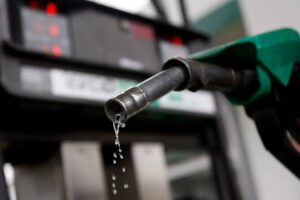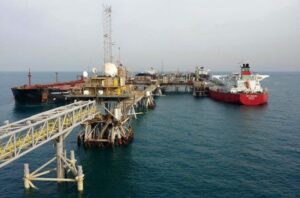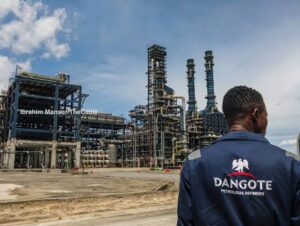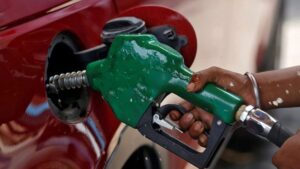
The Petroleum Products Retail Outlet Owners Association of Nigeria (PETROAN) has backpedaled on earlier claims that its members were lifting Premium Motor Spirit (PMS) from the Port Harcourt Refining Company, casting fresh doubts over the refinery’s actual petrol output.
Speaking on a live television programme on Wednesday, PETROAN’s National President, Billy Gillis-Harry, said, “We did not buy any commercial PMS from NNPC while the process of doing distribution from that depot was going on… There was no time we said that we were picking PMS from [NNPC] depot.”
This contradicts a statement released in February by PETROAN’s spokesman, Joseph Obele, who said, “PETROAN members are now loading petroleum products, including Dual-Purpose Kerosene, Automotive Gas Oil, and Premium Motor Spirit” from the Port Harcourt refinery.
Back in January, PETROAN had defended the refinery’s operations, claiming it was functional and loading products for marketers. The association had said, “Contrary to previous doubts, the Port Harcourt and Warri refineries are now fully operational.”
However, Gillis-Harry clarified that only diesel (AGO) and kerosene (DPK) were lifted by PETROAN members, while petrol was handled strictly by NNPC trucks. He added, “PMS was lifted by NNPC to NNPC trucks and stations… But we did not buy any commercial PMS from NNPC.”
This admission comes despite PETROAN’s earlier assertions that competition from functional local refineries would help lower prices and eliminate fake petroleum products.
Industry stakeholders have raised concerns over transparency at the state-run refineries, especially after the $1.5 billion overhaul of the Port Harcourt plant. Though the refinery resumed operations in November 2024, it was shut again in May 2025 for maintenance and reportedly ran at only 42% capacity prior to that.
The Nigerian Midstream and Downstream Petroleum Regulatory Authority also disclosed that the Warri refinery has been shut since January due to a technical fault in its Crude Distillation Unit.
With lingering doubts about the output of Nigeria’s refineries, many are renewing calls for their full privatization to ensure efficiency and accountability.