The Nigerian Upstream Petroleum Regulatory Commission (NUPRC) has received commendation from the Centre for Energy Governance and Accountability (CEGA) for securing federal approval for 37 new crude oil evacuation routes — a move aimed at curbing oil theft, improving transparency, and reviving production.
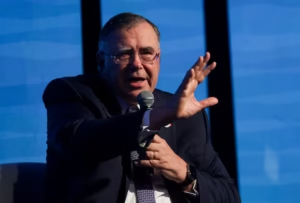
The announcement was made by NUPRC Chief Executive, Gbenga Komolafe, during the 2025 Nigeria Oil and Gas (NOG) Energy Week in Abuja. He explained that the new routes form part of a broader strategy to protect vital oil infrastructure, in collaboration with the Nigerian Armed Forces and other security agencies.
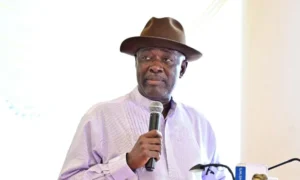
CEGA described the approval as a major breakthrough in Nigeria’s longstanding battle against oil theft and revenue losses. Dr. Kelvin Sotonye Williams, Executive Director of CEGA, said the move shows a strong commitment to ending decades of waste and inefficiency in the upstream sector.
“This isn’t just a paperwork update — it’s a strategic step to plug financial leakages, attract investors, and stabilise production,” Dr. Williams said.
He praised Komolafe’s leadership for turning policy into visible progress, noting that since the passage of the Petroleum Industry Act (PIA) in 2021, the regulatory environment has become more consistent and investor-friendly. CEGA cited $16 billion in new investment commitments made under the Tinubu administration as a sign of growing confidence in the sector.
The group also highlighted NUPRC’s “One Million Barrels Initiative,” launched in 2024 to increase daily crude production from the current 1.7 million barrels per day (bpd) to 2.5 million bpd by 2026. According to Komolafe, the initiative is already unlocking dormant oil fields, speeding up project approvals, and cutting through red tape in licensing.
Dr. Williams said ramping up oil production is essential for national energy security and economic independence, especially as the global oil industry needs an estimated $640 billion annually in investments through 2030 to meet projected demand.
Another area of progress, CEGA noted, is the HostComply platform developed by NUPRC to track oil companies’ compliance with host community obligations under the PIA. The tool is helping build trust in the Niger Delta by making social commitments transparent and measurable.
“Peace in oil-producing regions requires more than promises—it needs proof of delivery. HostComply is helping bridge that gap,” Williams said.
He also commended the commission’s efforts to integrate environmental accountability into its policies, especially its support for Nigeria’s 2060 net-zero emissions goal. CEGA stressed that energy transition doesn’t mean abandoning oil, but rather producing it more responsibly while investing in cleaner alternatives.
Calling for broader support, CEGA urged all stakeholders — public and private — to align with NUPRC’s reform agenda and adhere to climate-conscious practices. The group also advised the federal government to insulate regulatory decisions from political interference and enforce executive orders consistently, particularly those focused on local content and cost efficiency.
“With the right support and continued reform, Nigeria’s upstream oil sector can not only recover — it can lead Africa’s push for responsible energy development,” CEGA concluded.