Tensions are rising in Nigeria’s oil and gas sector as independent fuel marketers sound the alarm over Dangote Refinery’s plan to distribute petrol directly to end users, bypassing the traditional supply chain of depot owners and retail outlets.
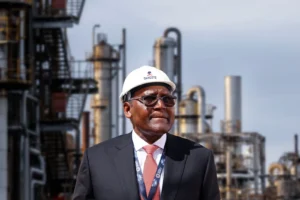
The $20 billion Dangote Petroleum Refinery recently announced it will begin nationwide fuel delivery on August 15 using 4,000 Compressed Natural Gas (CNG)-powered trucks. The move is intended to cut out logistics costs and improve efficiency—but industry groups are warning of serious consequences.
The Natural Oil and Gas Suppliers Association of Nigeria (NOGASA) and the Petroleum Products Retail Outlet Owners Association of Nigeria (PETROAN) say the plan could cause fuel scarcity, destabilize the current distribution structure, and put thousands of jobs at risk.
NOGASA’s National President, Bennett Korie, urged Dangote to reconsider and called on President Bola Tinubu to step in. “If filling stations are shut out of the system, we could lose over 50,000 outlets and disrupt a network that took years to build. If anything happens to the refinery, the country may not recover quickly,” he said.
Korie warned that managing refining, distribution, and retail operations under one company could repeat the mistakes made by the Nigerian National Petroleum Company Limited (NNPCL), which faced setbacks after trying to run both refineries and filling stations.
PETROAN President Billy Gillis-Harry also raised concerns, saying Nigerians should be cautious. “This is not just about business—it’s about national energy security. One company cannot refine, stock, transport, and sell fuel while also setting the price. That’s too much control in one hand,” he said.
Fuel prices at private depots have already surged from N815 to N870 per litre, partly due to Dangote’s suspension of petrol sales across its terminals. Marketers were instructed to pause payments temporarily, deepening uncertainty in the market.
A Dangote Group official defended the plan, saying it’s aimed at reducing petrol prices by cutting out logistics costs. “We’re not trying to dominate. We’re trying to help. Nigeria is big enough for everyone,” the official said, insisting that the plan would not eliminate smaller marketers.
Still, many in the industry remain unconvinced. NOGASA fears that centralizing fuel supply in one company could force smaller businesses out and make the system too vulnerable.
IPMAN’s National Vice Chairman, Hammed Fashola, admitted the situation is tense. “Transporters and intermediaries are worried. Everyone wants to stay in business. We just hope Dangote will listen to stakeholders before moving ahead.”
As the launch date for Dangote’s direct fuel supply draws near, industry players are calling for urgent dialogue to prevent what could become a full-blown crisis in the country’s petroleum sector.