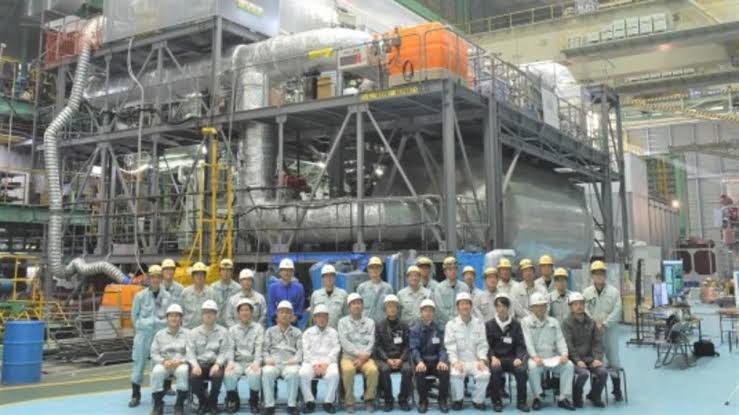
Japan Engine Corporation (J-ENG) has unveiled the world’s first commercial ship engine that runs on ammonia, a move experts say could reshape the future of maritime transport. The 7UEC50LSJA-HPSCR engine, which can operate on both ammonia and heavy fuel oil, represents a major step toward cutting greenhouse gas emissions in the shipping industry.
The dual-fuel design allows vessels to transition seamlessly between conventional marine fuels and ammonia, providing operational flexibility as shipping gradually moves toward greener energy solutions. This innovation is part of Japan’s Green Innovation Fund Project, which supports the development of cleaner technologies in maritime transport.
Pioneering Cleaner Maritime Propulsion
Ammonia is emerging as a promising alternative to traditional marine fuels, and J-ENG’s engine leverages this potential to drastically reduce emissions. The company reports that the engine achieves a 95% ammonia co-firing rate at full load, resulting in more than a 90% decrease in greenhouse gas emissions compared to standard engines. Safety features and monitoring systems are integrated to handle ammonia’s toxic properties, ensuring crew protection during operations.
The engine has undergone extensive testing and certification to confirm its performance, efficiency, and safety. Following these successful trials, it is scheduled for installation on an Ammonia-Fueled Medium Gas Carrier (AFMGC) in October 2025, when it will make its first commercial voyage. This deployment is expected to provide valuable data on real-world performance and inform further advancements in ammonia-based marine engines.
Years of Research and Future Plans
J-ENG’s ammonia engine is the product of years of meticulous research, beginning with prototype testing to optimize combustion, prevent leaks, and ensure safe handling of ammonia. The company’s innovation demonstrates a strong commitment to sustainability and positions Japan as a leader in next-generation marine propulsion technology.
Looking ahead, J-ENG plans to develop a larger ammonia engine with a 23.6-inch bore, aimed at meeting growing demand for clean-fuel vessels. This next-generation engine is expected to enter operations by fiscal year 2028, further supporting the maritime sector’s shift to environmentally friendly fuels and Japan’s broader carbon neutrality goals by 2050.
Global Implications
The introduction of ammonia-powered ships could accelerate the adoption of clean fuels across the shipping industry, encouraging other manufacturers to follow suit. As nations worldwide seek to meet climate targets, innovations like J-ENG’s engine highlight the potential for transformative technology to reduce emissions while maintaining operational reliability in global maritime transport.