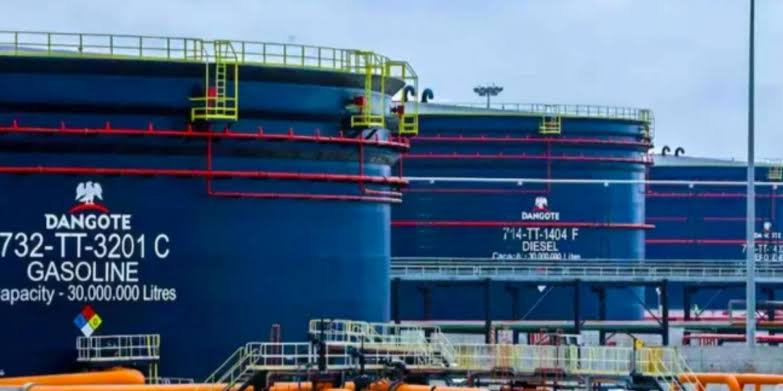
The crisis at the multi-billion-dollar Dangote Petroleum Refinery has deepened following a dispute between the company and the Petroleum and Natural Gas Senior Staff Association of Nigeria (PENGASSAN) over the sudden dismissal of workers.
The refinery, which has been positioned as a game-changer for Nigeria’s energy sector, recently terminated the employment of several staff members. Management insists the move was necessary to safeguard the facility from repeated cases of sabotage, while the workers’ union says it is a calculated attempt to intimidate staff who recently joined PENGASSAN.
According to the union’s branch executives, employees who voluntarily signed up for union membership were abruptly locked out of the refinery before receiving termination emails addressed to all staff. The union also accused management of victimising Nigerian workers while expatriates continued to have unrestricted access to the facility.
PENGASSAN condemned the action as a breach of workers’ constitutional rights to association and described it as a deliberate attack on organised labour. It further alleged that affected employees were subjected to unfair conditions, including being asked to cover their own transportation costs to work despite the company’s existing provisions.
On its part, the refinery’s management defended the decision, stating that internal sabotage had compromised operational safety at the 650,000-barrel-per-day plant. In an internal memo, the company said it had no choice but to reorganise its operations and directed disengaged staff to hand over company property while awaiting computation of their entitlements.
The refinery, which began operations in 2024, has faced growing turbulence in its short life span. In recent months, it has clashed with oil unions and marketers over labour conditions, pricing policies, and distribution strategies. Industry observers suggest the latest layoffs may also be linked to ongoing disputes with petroleum marketers who have accused Dangote of imposing restrictive terms that could disrupt Nigeria’s downstream sector.
As tension builds, stakeholders warn that the dispute could further unsettle an already fragile fuel supply system, raising fresh questions about the refinery’s promise to stabilise Nigeria’s petroleum market.