The Federal Government has reaffirmed its commitment to strengthening Nigeria’s domestic refining capacity by guaranteeing crude oil supply to local refiners and reducing administrative delays in the sector.
Minister of State for Petroleum Resources (Oil), Heineken Lokpobiri, made the pledge during the 2025 Council of Refiners Association of Nigeria (CORAN) Summit in Lagos. Represented by his Technical Adviser, Ndah Adaba, Lokpobiri said the move is part of efforts to ensure that every barrel of crude produced in the country delivers tangible economic value.
He explained that the government is deepening the implementation of the Domestic Crude Oil Supply Obligation (DSCO) to make crude readily available to indigenous refiners. This initiative, he said, supports President Bola Tinubu’s Renewed Hope Agenda, which identifies local refining as crucial to achieving energy self-sufficiency, industrial growth, and employment generation.
Lokpobiri added that through the Nigerian Midstream and Downstream Petroleum Regulatory Authority (NMDPRA), the licensing process has been simplified to encourage credible investors and eliminate unnecessary bureaucracy.
He also highlighted the ongoing ‘Naira for Crude’ policy, which he said would help stabilise production costs, limit exchange rate pressures, and further promote local refining.
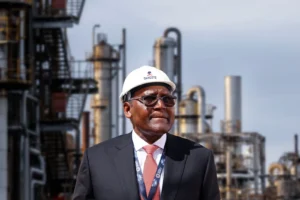
The minister noted that the successes of Dangote Refinery, Waltersmith Petroman Refinery, and Aradel Holdings demonstrate that Nigeria has both the expertise and capacity to refine its crude domestically.
To strengthen regional energy integration, Lokpobiri disclosed that the government had introduced the West African Fuel Reference Market, designed to make Nigeria a major refining and petroleum distribution hub in West Africa.
He emphasized collaboration among the NMDPRA, Nigerian Upstream Petroleum Regulatory Commission (NUPRC), and security agencies to curb crude theft, secure feedstock for refineries, and promote investor confidence.
“The journey to Africa’s energy independence begins with refining our own crude,” Lokpobiri said, urging African nations to work together in developing shared refining infrastructure and logistics systems.
Meanwhile, a new Argus report shows that petrol imports into Nigeria fell to an eight-year low in September 2025, reflecting the impact of government reforms and improved domestic refining capacity. The country imported about 116,000 barrels per day in September, down from 154,000 barrels per day in August — the lowest level since 2017.
Despite maintenance activities and labour disruptions at the Dangote Refinery, the report noted that Nigeria’s ongoing shift toward local refining is gradually transforming its downstream oil market.