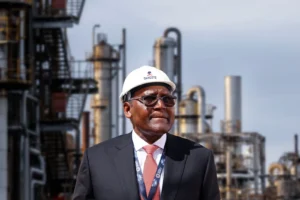
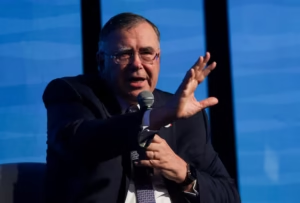
The Group Chief Executive Officer of the Nigerian National Petroleum Company Limited (NNPC Ltd), Bayo Ojulari, has assured Nigerians that the ongoing price competition in the petroleum sector will eventually benefit consumers.
Speaking on Sunday after briefing President Bola Tinubu in Lagos, Ojulari said the fluctuations in fuel prices are a natural outcome of Nigeria’s shift from complete import reliance to domestic refining. “Where there is healthy competition, consumers are the winners. The market will stabilise over time, but transitions like this naturally create some tension,” he explained.
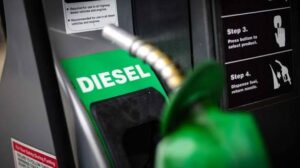
The remarks come amid a sharp decline in petrol prices over the past year, driven largely by competition among Dangote Refinery, NNPC, and independent marketers. Prices have fallen from over N1,200 per litre in November 2024 to as low as N739 per litre in December 2025.
Ojulari clarified that NNPC no longer sets fuel prices or regulates the market. Under the Petroleum Industry Act (PIA), regulatory duties are now split between the Nigerian Midstream and Downstream Petroleum Regulatory Authority (NMDPRA) and the Nigerian Upstream Petroleum Regulatory Commission (NUPRC), leaving NNPC as a fully commercial entity that must operate profitably without federal allocations.
“Post-PIA, our focus is purely on production and supplying the market,” he said, adding that NNPC acts as a “supplier of last resort,” ensuring fuel availability alongside other major players like Dangote Refinery.
The CEO noted that the increased refining capacity has temporarily unsettled the market. “Having major refineries operating at the same time will naturally impact market equilibrium, but this is a positive development for Nigeria and West Africa,” he said.
Ojulari also highlighted NNPC’s production growth, reporting oil output rising from 1.5 million barrels per day last year to over 1.7 million barrels per day, while gas production increased to over seven billion standard cubic feet daily.
The company aims to hit 1.8 million barrels per day in 2026, moving toward President Tinubu’s target of two million barrels per day by 2027 and attracting over $30 billion in investment by 2030.
He further announced the completion of the main line of the 614-kilometer Ajaokuta-Kaduna-Kano (AKK) gas pipeline, including crossing the River Niger. When operational in early 2026, the pipeline will deliver gas to northern Nigeria for industrialisation, fertilizer production, and power generation.
Ojulari concluded that while the market faces short-term tensions, the ongoing competition and growth in domestic refining capacity will ultimately benefit Nigerians through improved supply and lower fuel prices.