Rising fuel expenses linked to tensions in the Middle East have driven Nigerian businesses to increase their selling prices to the highest level in 16 months, even as overall private-sector activity continued to grow in April.
This is according to the latest Purchasing Managers’ Index compiled by Stanbic IBTC Bank and S&P Global, with endorsement from the National Bureau of Statistics.
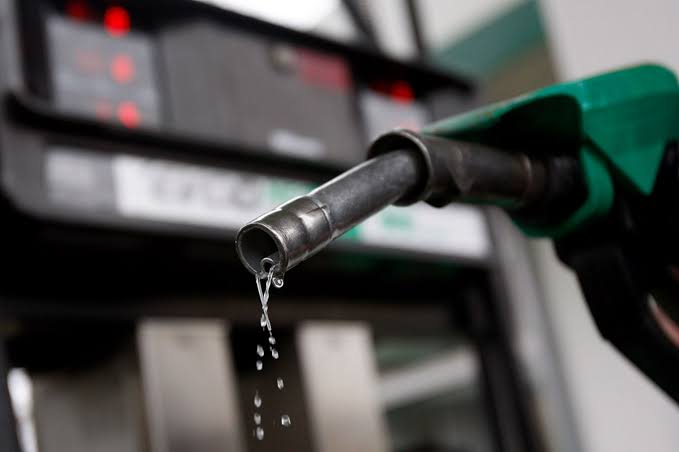
The report showed that companies passed on higher input costs to customers at a faster pace, leading to the quickest rise in output prices since December 2024. Businesses cited increased fuel expenses as a key factor behind the surge in operating costs and final prices.
Despite the inflationary pressure, business conditions remained in expansion territory. The headline PMI rose to 52.4 in April from 51.9 in March, marking the third straight month above the 50-point benchmark that signals improving conditions.
Firms reported stronger customer demand and rising new orders, but noted that higher prices limited the pace at which activity could expand. Three of the four sectors tracked recorded growth, while the services sector experienced a contraction.
Purchase costs rose sharply during the month, staying close to March’s 15-month peak. Many respondents linked the price increases directly to fuel costs tied to the Middle East conflict, underscoring how global energy shocks are feeding into domestic inflation.
Some companies adjusted staff wages to help workers cope with higher transportation expenses, resulting in a slight increase in labour costs. Hiring continued, though at the slowest rate in three months.
Backlogs of work grew for a third consecutive month, with firms blaming staff shortages, delays in customer payments, and difficulty sourcing raw materials. In response, companies stepped up purchasing activity and built up inventories at the fastest pace in five months as a precaution against supply disruptions.
Supplier delivery times improved marginally as firms prioritised prompt payments, although the gains were the weakest seen this year.
Business confidence strengthened, with around half of surveyed firms expecting higher output over the next 12 months. Plans to expand into new markets, open additional branches, and increase stock levels were cited as reasons for the optimism.
Commenting on the findings, Muyiwa Oni of Stanbic IBTC said the improvement in private-sector health supports expectations of stronger economic growth in 2026. He projected that the Nigerian economy could grow by 4.22 per cent next year, driven largely by non-oil sectors such as services, agriculture, manufacturing, electricity, and solid minerals.
However, he noted that growth in the oil sector may slow compared to 2025, with crude production expected to average about 1.70 million barrels per day.
The survey was conducted between April 9 and April 28 and covered roughly 400 companies across agriculture, manufacturing, construction, wholesale, retail, and services.