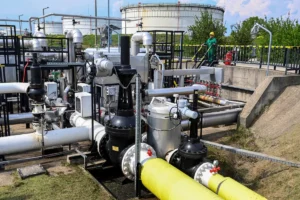
Prime Minister Anthony Albanese has defended the federal government’s decision to extend the life of Australia’s largest gas project — the North West Shelf — until 2070, arguing it’s vital for the nation’s energy transition despite fierce criticism from climate advocates.
The project, operated by Woodside Energy, received provisional environmental approval this week, extending its operations well beyond the previous 2030 end date.
Environment Minister Murray Watt signed off on the extension, sparking backlash from environmental groups and political opponents who claim it undermines Australia’s net zero by 2050 commitment.“In order to get that investment in renewables you do need firming capacity — whether it be batteries, hydro or gas,” said Albanese in a radio interview with ABC Brisbane.
“This is a difficult balancing act, but it’s necessary as WA closes its last coal plant in 2027.”The decision does not expand the project’s physical footprint, but it opens the door to the Browse gas project, a new offshore field Woodside is now pushing to link to the existing Karratha plant via a 900-kilometre pipeline.
Woodside CEO Meg O’Neill welcomed the move: “Browse is important, particularly in the 2030s and 40s for domestic gas and energy security in Western Australia.”But critics warn the long-term fossil fuel commitment sends a contradictory message.
Greens leader Larissa Waters slammed the decision: “This is a dangerous decision… it’s cynical to delay it until after the election, knowing it would horrify the public.”Independent MP Allegra Spender echoed that concern, calling the current environmental laws outdated.
“Our environmental laws don’t take account of climate change… it sends very mixed messages to say we’re committed to net zero, then approve gas to 2070.”
The government is currently reviewing the Environment Protection and Biodiversity Conservation (EPBC) Act, with a promise of reform later this term.
Meanwhile, the Coalition has also reopened discussions on its net zero position, with Nationals deputy leader Kevin Hogan confirming the party is reviewing the 2050 target agreed to in 2021.“We’re going to do a study into it — the economic impacts, new technologies, and alternatives,” Hogan said.
Despite progress in renewables — now at 46% of the national energy mix — critics argue decisions like this risk locking in fossil fuel reliance well beyond the net zero deadline.