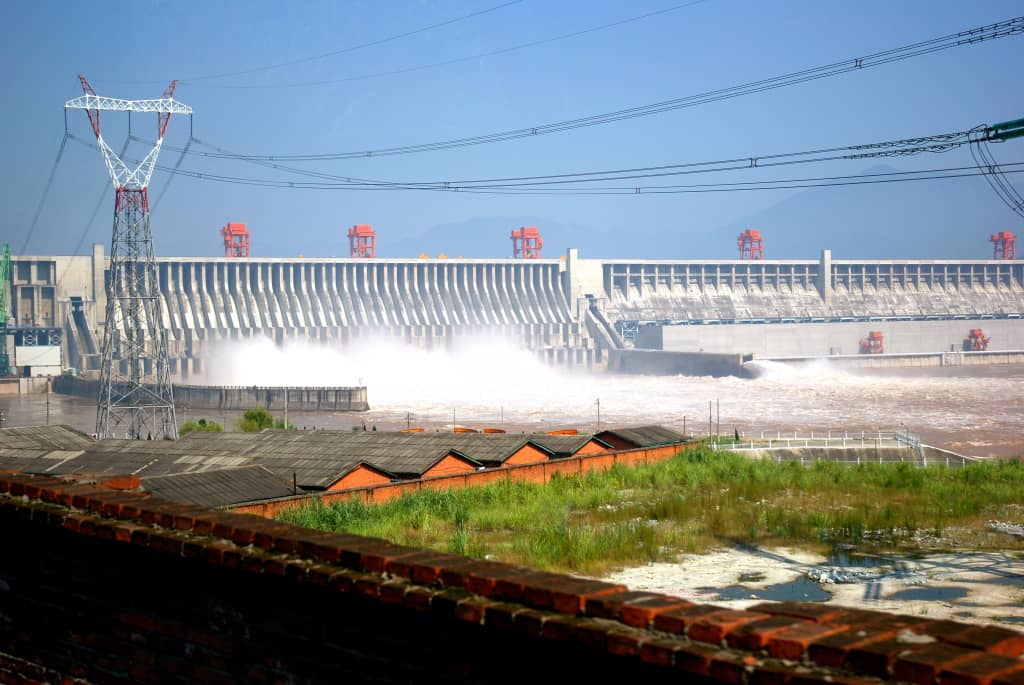
China has announced the launch of a monumental hydroelectric project on the Tibetan Plateau, a structure so tall it rivals the height of the Eiffel Tower. Once fully operational, the plant is expected to deliver around 11 billion kilowatt-hours of electricity annually—enough to supply power to several provinces.
The dam, built more than 1,000 feet above sea level in one of the world’s most unforgiving environments, represents a major turning point in China’s renewable energy strategy. Officials say the project’s steady and predictable power output will allow the country to scale back on wind and solar installations in less productive regions.
Overcoming Extreme Conditions
Constructing the facility was no small feat. Workers and engineers battled thin air, freezing temperatures, and treacherous terrain. Helicopters were used to transport heavy machinery, while medical stations were set up on-site to deal with the health risks of working at such high altitudes.
Despite the challenges, engineers highlighted a key advantage: the elevated setting allowed water to generate more energy as it descended through turbines, boosting efficiency compared to dams at lower levels.
Why Hydropower Now
Unlike solar and wind power—which are vulnerable to cloudy skies, calm days, or nighttime demand—hydroelectric plants provide reliable, round-the-clock electricity. This stability is increasingly valuable as China manages the energy needs of its rapidly growing economy.
Authorities stressed that the decision to scale down parts of the solar and wind sectors is not a retreat from renewables, but a recalibration. Hydropower, they argue, will serve as a strong backbone for the national grid while wind and solar continue to play complementary roles.
Building Big While Protecting Nature
Beyond its size, the project stands out for its ecological safeguards. Fish passages were integrated into the design to allow species migration, while soil restoration measures are being deployed to reduce environmental damage in the surrounding mountains.
“The goal was to combine innovation with responsibility,” one project engineer said. “This proves that major infrastructure doesn’t have to come at the expense of nature.”
A Blueprint or a One-Off?
Experts point out that China’s geography gives it a unique advantage: fast-flowing rivers coursing through steep mountain ranges. While countries with similar terrain could attempt such projects, the immense cost—often running into billions of dollars—makes them unlikely outside nations with comparable financial and logistical capacity.
For now, China’s latest achievement serves both as a symbol of engineering ambition and a signal of how the world’s largest energy consumer plans to balance its clean energy future.