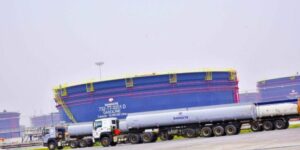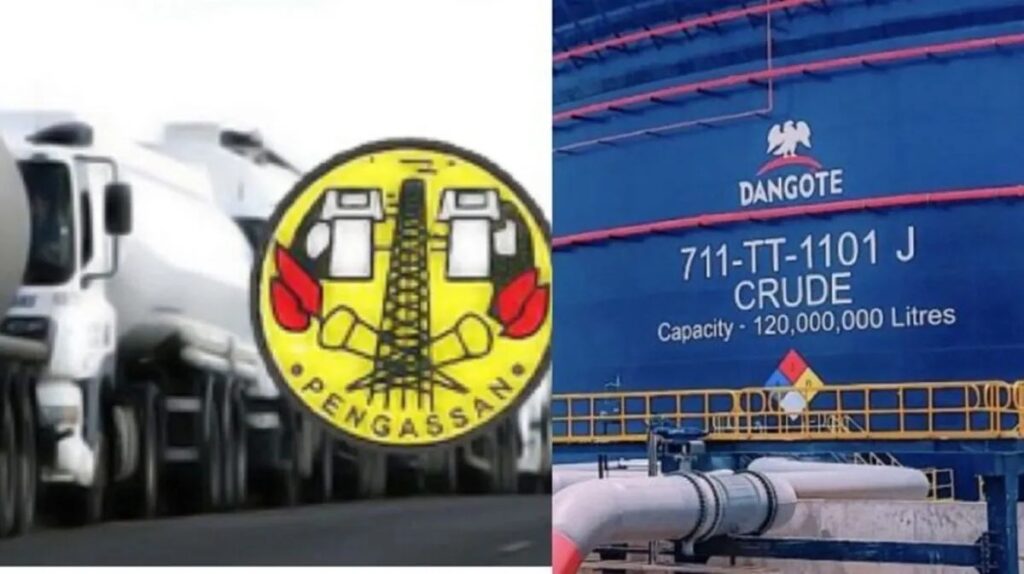
Nigeria’s crude oil production dropped sharply during the recent standoff between the Petroleum and Natural Gas Senior Staff Association of Nigeria (PENGASSAN) and the Dangote Refinery, with output falling by about 283,000 barrels per day — nearly 16 percent of the nation’s total.
Data from the Nigerian National Petroleum Company Limited (NNPC) revealed that the industrial action, which lasted several days, also caused a decline of 1.7 billion standard cubic feet of gas per day and disrupted more than 1,200 megawatts of electricity generation.
The strike began on September 28 after Dangote Refinery reportedly dismissed more than 800 unionised employees. The move triggered protests from PENGASSAN, which demanded the workers’ reinstatement and accused the company of unfair labour practices.
Key facilities including Shell’s Bonga floating production unit and the Oben gas plant were temporarily shut down, while cargo loadings at major export terminals such as Akpo, Brass, and Egina were delayed. The disruption also affected Nigeria LNG’s Train 5 and 6 operations, leading to postponed maintenance schedules and shipment delays.
NNPC said it activated emergency business continuity plans and deployed non-union personnel to sustain essential operations during the stoppage. Despite those measures, the company confirmed that the country suffered “significant revenue losses” due to missed crude liftings and reduced gas exports.
The strike was suspended after government mediation between PENGASSAN and Dangote Refinery, restoring stability to the sector. However, NNPC cautioned that the incident exposed underlying weaknesses in Nigeria’s energy supply chain and called for stronger crisis management systems to prevent future disruptions.