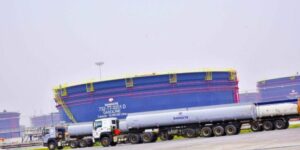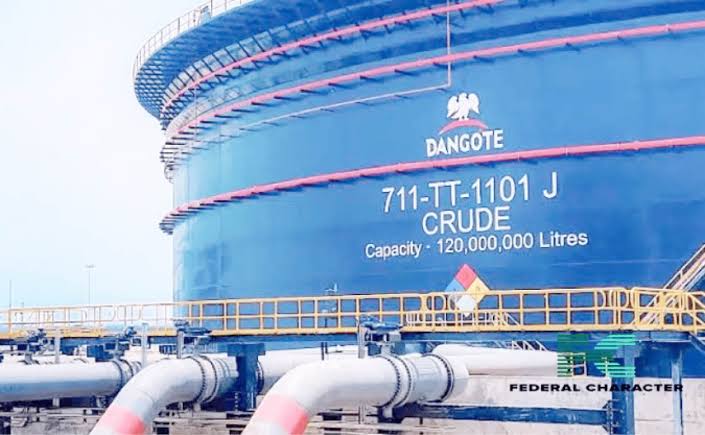
The Federal Government sold ₦219.38 billion worth of crude oil to the Dangote Petroleum Refinery between January and April 2025, even as tensions mounted over how the refinery pays for its supply.
According to documents from the Nigerian National Petroleum Company Limited (NNPCL) reviewed at recent FAAC meetings, the crude deliveries totaled over 1.9 million barrels and were priced between $74 and $80 per barrel. The oil came from local fields operated by companies under production-sharing agreements.
Though the refinery was expected to pay in naira under a special deal, the arrangement hit a snag in March. Dangote Refinery temporarily stopped selling its products in naira, saying it couldn’t meet its dollar-based crude purchase costs while receiving naira revenues. It claimed it had already sold more fuel in naira than the value of crude it had received under the deal.
This led to a sharp rise in fuel prices, with loading rates in Lagos shooting above ₦900 per litre. The Federal Executive Council responded by doubling down on the naira-for-crude policy, calling it a long-term strategy to support local refining and reduce dependence on imports.
Still, the refinery continues to describe its crude supply as inadequate, saying it has had to import oil from the U.S. to keep operating. Despite these concerns, official records show that crude deliveries to the refinery rose sharply month-on-month, growing from ₦17.5 billion in January to over ₦111 billion in April.
Meanwhile, crude exports brought in about ₦231.47 billion during the same four months, with earnings peaking in March before plunging in April. That month, crude export revenues dropped to just $1.59 million, and no local crude was delivered to refineries like Dangote’s.
Total oil and gas earnings for April reached $6.25 billion, mostly from gas exports. However, there was a significant drop in revenue compared to March, and fewer funds were shared among government tiers.
Amid concerns over soaring fuel prices, petroleum marketers are calling on the government to make crude more affordable for local refineries. IPMAN’s vice president, Hammed Fashola, suggested that discounted crude prices would help bring down fuel costs for consumers.
He also urged closer collaboration between the government and Dangote, especially now when local refining is seen as key to easing economic pressure.
While officials insist the naira-for-crude plan is here to stay, some insiders argue that the policy may not work as intended without addressing the currency mismatch and aligning it with global oil market practices.